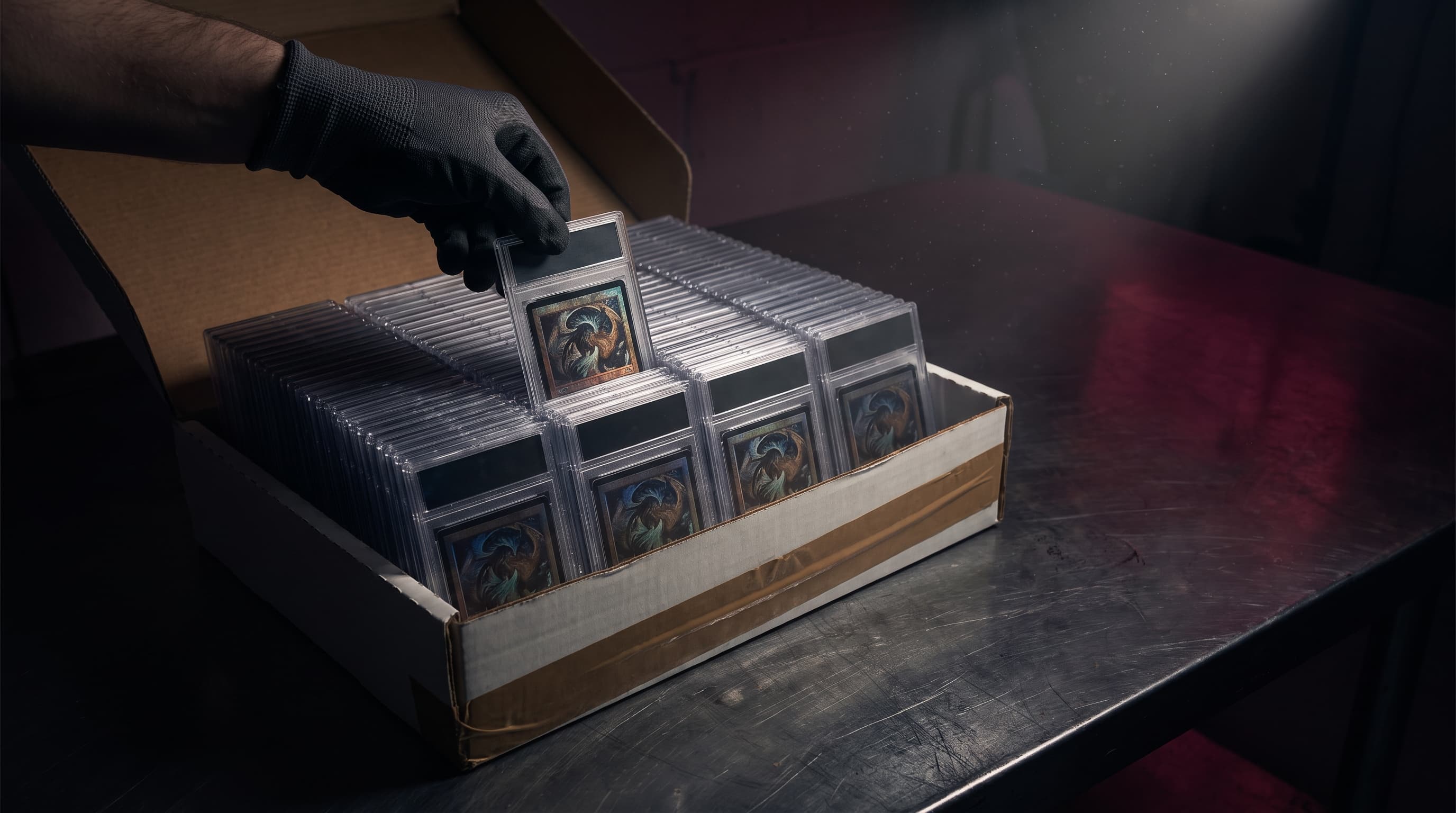
The PSA backlog is shrinking quickly. PSA's backlog tracker, as reported by HEAVY via Yahoo Finance, showed about 9.9 million cards waiting on Sept. 8, 2026. That is down from 10.9 million on Aug. 25 and from a late-July high of 12.4 million on July 28. Roughly 2.5 million cards cleared in six weeks, about 20% of the queue.
For context, 12.4 million was not the high point for 2026. The backlog reached about 14 million in early June, after collectors rushed to submit before PSA paused its cheapest service levels. It fell to 12 million by June 30 and 11 million by July 14, then rose again in late July before this latest decline.
So the question for anyone holding, buying or submitting modern cards: when millions of cards come back as slabs, do PSA 10 prices take a hit? The honest answer is that nobody has measured it yet. You can test it yourself, card by card, and this guide shows how.
The 2026 PSA backlog timeline
These figures come from PSA's own tracker as reported by trade outlets. PSA's backlog tracker page is the primary source, so check the current number there.
-
May 14: A PSA pricing update set off a submission surge of about 20%, roughly 1.6 million cards (Athlon via Yahoo Sports; Baseball America).
-
May 28: About 10 million cards in the queue when PSA announced the pause.
-
June 2: The four Value tiers (Value Bulk, Value, Value Plus, Value Max) were paused. Regular, at $79.99 per card, became the cheapest open tier. Before the pause, the Value tier cost $24.99 per card (Baseball America).
-
Early June: About 14 million. Baseball America dates it to June 3. Sports Illustrated says the figure was revealed June 9.
-
June 30: 12 million.
-
July 14: 11 million.
-
July 28: 12.4 million, a rebound.
-
Aug. 11: 11.85 million (CardGrader).
-
Aug. 25: 10.9 million.
-
Sept. 8: 9.9 million.
Secondary reports summarizing a PSA update gave three reasons for the late-July bump: more submissions in the higher tiers, Value-tier shipments still arriving within the 45-day eligibility window after the pause, and convention-season submissions. We could not load PSA's own page to confirm that wording, so treat it as reported rather than quoted.
What "clearing the backlog" means for supply
The backlog is cards PSA has received but not yet graded. When a card leaves the queue, it goes back to the person who sent it, now in a slab. It does not go straight onto eBay.
That matters for the "flood" argument. Some submitters grade in order to sell. Others keep their cards, send them to a vault, or wait for a better market. The backlog number tells you how many slabs are being produced. It does not tell you how many will be listed for sale, or when.
Which cards are coming out now
The queue still holds submissions made before June 2 at the cheap Value tiers, including the May surge, plus stragglers that arrived during the 45-day window. At $24.99 a card, the Value tier made grading worthwhile for cards that would not justify $79.99. Our research suggests these were mostly modern cards, with Pokemon making up a large share.
That points to one segment: modern cards worth roughly $25 to $150 raw and at PSA 10. If new supply pushes prices anywhere, this is the most likely place. High-end vintage is a different market. Those cards were more likely submitted at higher tiers and are not part of a cheap-tier bulk wave.
The pause also changed who is submitting. Since June 2, every new submission has cost at least $79.99 per card. Cards submitted after the pause lean toward higher-value items where the fee makes sense, so the $25 to $150 group comes mostly from the older Value-tier submissions.
A steady flow, not a single dump
PSA said June was a record month, more than 10% above its previous monthly high, and that July topped June (Baseball America). SI cited GemRate estimates of about 2 million cards graded a month, possibly 2.4 million. CardGrader puts the pace at about 90,000 cards a day. HEAVY reports PSA runs five grading hubs, and the Plano, Texas, hub became fully operational this summer.
Those numbers describe cards coming back continuously, week after week. Any effect on prices is more likely to show up as a slow increase in listings for particular cards than as one sudden drop.
Keep in mind that the backlog figure is a net number. The queue fell by about 2.5 million over 42 days, roughly 60,000 cards a day, while gross output is estimated at about 90,000 a day. The gap is new submissions coming in at Regular and higher tiers.
The second wave may matter more
PSA's benchmark for bringing back the Value tiers is a backlog of about 5 million units (Baseball America). HEAVY reports PSA said it could evaluate reopening one service tier in September if the current pace holds. In July, Athlon estimated a full reopening between November 2026 and January 2027.
As a rough check: getting from 9.9 million to 5 million at the six-week net pace of about 60,000 a day would take around 80 days. That points to late November or early December, which fits Athlon's window. This is simple math, not a forecast. New submissions or a partial reopening would change it.
When cheap grading returns, expect a burst of new submissions first. More graded cards would follow months later. Secondary analysis from Athlon, cited by slabfol.io, sees that second wave as the bigger risk to modern Pokemon slab prices. That is a hypothesis. It has not been measured.
How to check your own cards
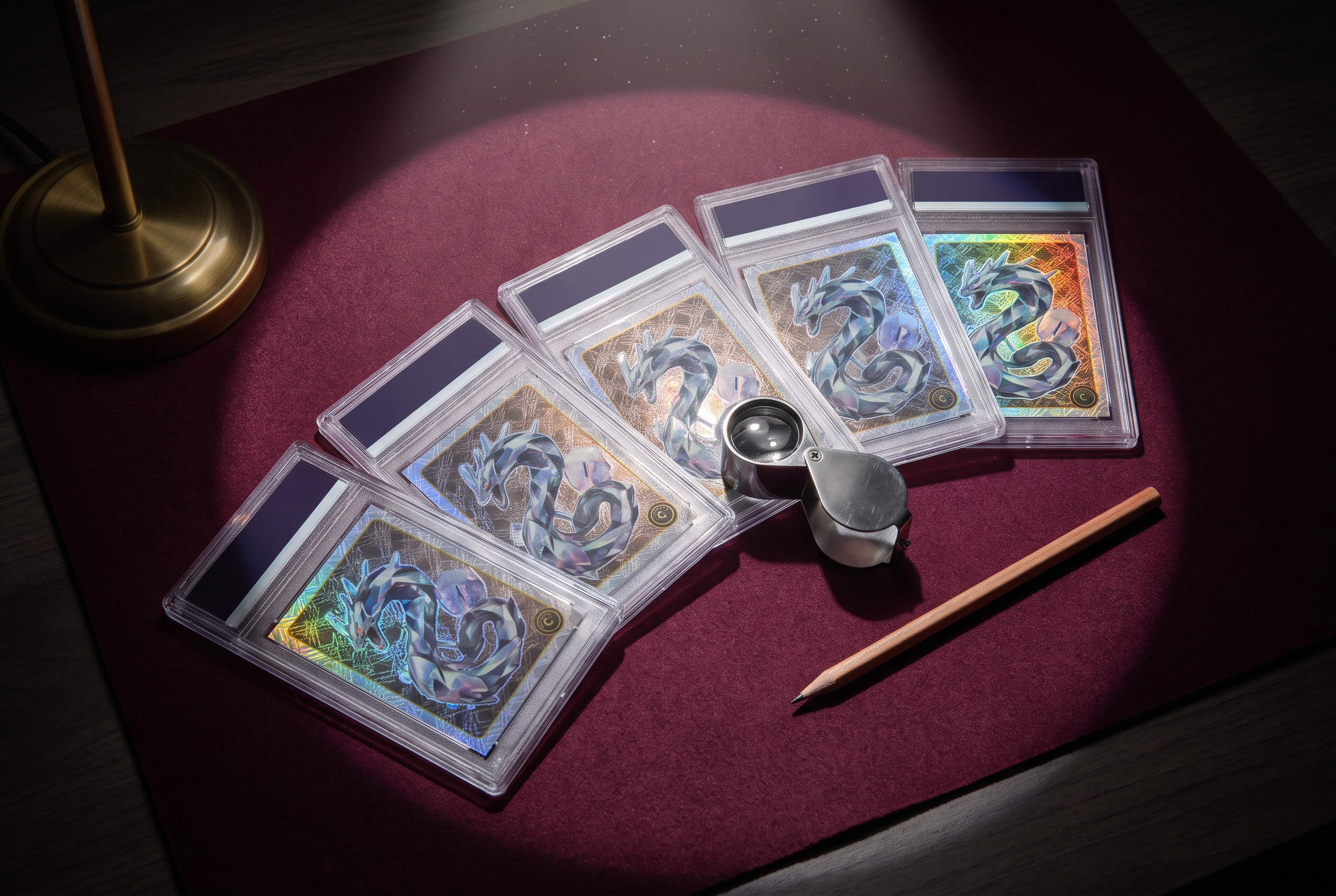
We found no source that measures listing counts or PSA 10 prices against the backlog. So don't take anyone's word for a "flood," including ours. Check the cards you actually own or want. For each one:
-
Pop report changes. Record the PSA 10 population for the exact card and variant once a week. If the population jumps sharply over a few weeks while the backlog falls, supply is arriving for that card.
-
Active listings. Search eBay for "[card name] PSA 10" and write down the number of active listings on the same day each week. More listings plus a higher population means more competition for sellers.
-
Sold prices. Use eBay sold listings and 130point to find the median of the last 10 to 20 sales. Use the median, not the latest sale or the highest one. Compare it with the median from a month earlier.
-
Grading volume by set. GemRate tracks daily grading by set. It can show whether a set you hold is being graded in large numbers right now.
If population and listings are both rising while the sold median falls, the flood idea is holding up for that card. If population rises and prices stay flat, demand is absorbing the new supply. Either way, you are working from the data for your card rather than a guess about the whole hobby.
What to do this week
-
Sellers of high-population modern PSA 10s: If you were planning to sell anyway, a listing before any Value-tier reopening avoids competing with the second wave. That is a timing consideration, not a prediction that prices will fall.
-
Buyers: There is little reason to rush on mid-value modern slabs. Track the median of recent sales for a few weeks and buy when the data supports it.
-
Raw submitters: Compare grading now at $79.99 Regular with waiting for a cheaper Value tier. Our card grading break-even calculator compares the extra net proceeds using the fees, shipping and sale prices you enter. It does not predict grades or future prices. For many cards under about $150, the gap between $79.99 and the old $24.99 decides the answer.
-
Vintage and low-population holders: Keep an eye out, but the cheap-tier modern wave is not aimed at your segment.
Caveats
No price effect has been measured. Demand counts as much as supply, and a popular set can absorb a lot of new slabs. The backlog figures are PSA's own reporting, relayed through trade outlets. PSA holds about 70% of the grading market (SI), so its queue matters a lot, but it is still only one company.
Related reading
-
Your Grading Bill Is Not Your Biggest Cost: The True Cost of Grading Cards
-
A Pre-Bid Checklist for Vintage Cards in the September Auctions
-
How to Read Sold Comps on a Rookie Card Without Fooling Yourself
Sources
-
PSA Backlog Still At 11 Million Cards After Announced Pause To Value Card Grading (Baseball America)
-
PSA Backlog Falls to 12 Million: What It Means for Card Grading in 2026 (SI, July 1, 2026)
Note: This article contains AI-assisted content and has been reviewed in our editorial workflow.
DISCLAIMER: PureGrail articles are for informational and entertainment purposes only. Nothing on this site constitutes financial, investment, or legal advice. Collectibles are speculative assets and values can decrease significantly. Always conduct your own research before buying or selling. Past price performance does not indicate future results.