To check a slab against the PSA stolen cards list, run its cert number at psacard.com/cert before paying, search PSA's published list of 6,451 stolen items for the cert and any serial number, optionally search TheGTCR.com, and confirm the lookup matches the card, year, set and grade on the slab. Any mismatch or missing result means stop.
-
Get the cert number and a clear photo of the label from the seller.
-
Run the cert at psacard.com/cert before you pay.
-
Search PSA's theft list for the cert number, and the serial number if the card is serialized.
-
Optionally search TheGTCR.com, a registry of stolen items.
-
Match every field on the slab to the lookup record.
What happened in Santa Ana
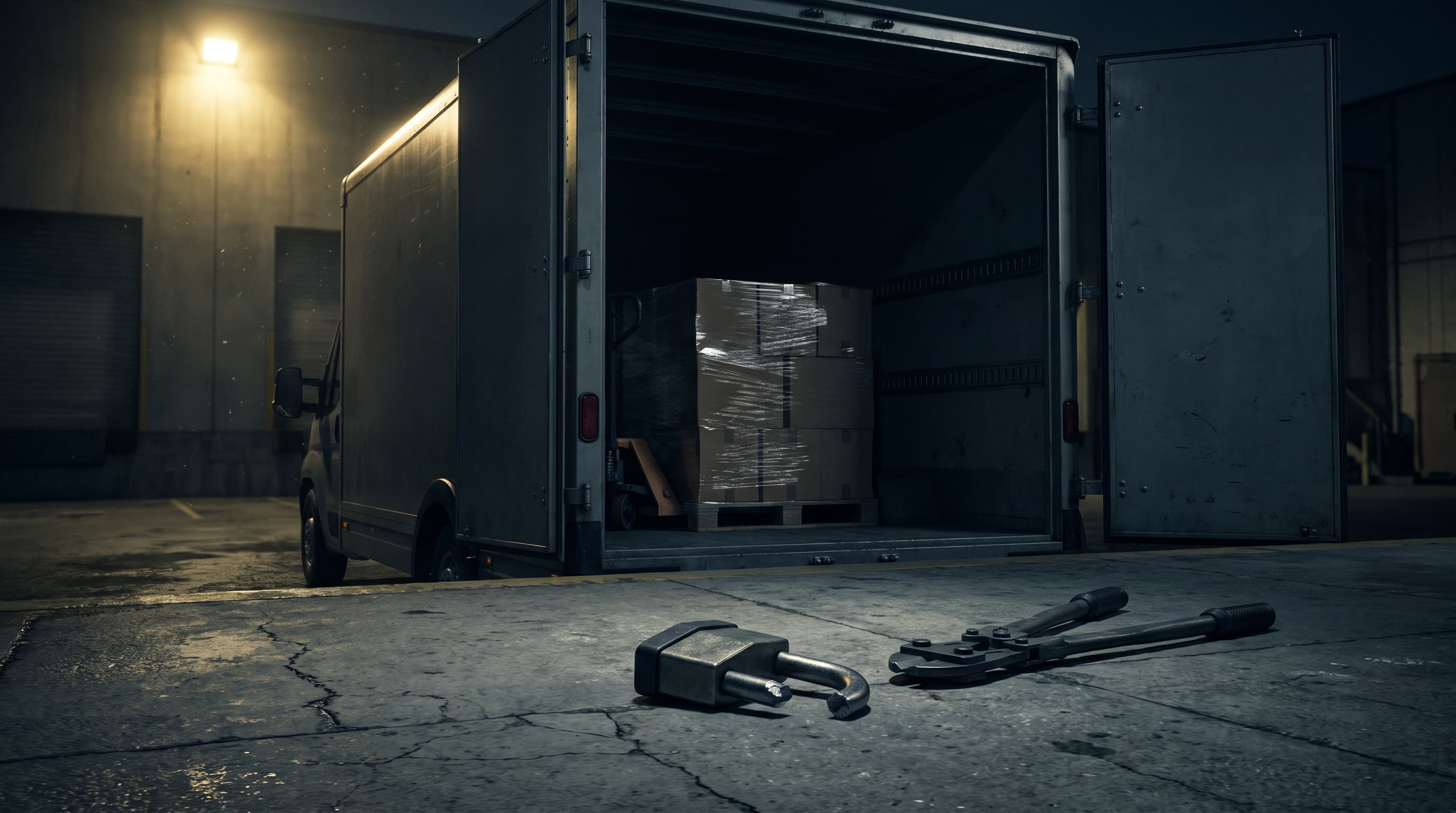
On October 13, 2026, thieves took customer packages from a FedEx truck parked outside PSA's facility at 1610 E. St. Andrew Place in Santa Ana, California, according to TechTimes. Citing Santa Ana police via The Athletic and CBS LA, Heavy reported that the driver was away from the truck for 60 to 90 minutes. In that time the thieves took two full pallets of about 100 packages each plus about 50 packages from a third pallet, roughly 250 orders in all. The Sports Card Prospectus Substack reported that someone cut the lock.
The value figures differ depending on who you read, so here they are with their sources. Heavy reported that PSA valued the two full pallets at about $963,000. Police had not confirmed that number, and the third pallet was still being inventoried. Dexerto, citing Santa Ana PD, put it at nearly $1 million. TechTimes called $963,000 a "confirmed floor value."
TechTimes lists these notable items: a 1999 Pokémon Charizard Holo 1st Edition, a 1933 Goudey Babe Ruth, a 1935 National Chicle Bronko Nagurski and a Gleaming Gold Smaug graded PSA 9. It also reports that nearly 3,000 of the stolen items are Pokémon cards. If you are buying graded Pokémon or high-end vintage this autumn, screen every slab before you pay.
What the PSA stolen cards list contains
PSA's list covers 6,451 stolen items. Sports Illustrated Collectibles reports that it gives a certification number for every item and a serial number for every serialized card. ICv2 describes it as a 93-page PDF. SI and Dexerto both reported the full list on October 24.
Dexerto quotes PSA: "We have deactivated the certification numbers associated with every stolen graded item." According to SI, PSA has also given the full list to marketplace sellers, auction houses and digital commerce platforms. GempireCards confirms the deactivation and the list.
Step 1: Get the cert number before anything else
Ask the seller for the cert number and a clear, readable photo of the full label. Do this before you make an offer, not after you have paid. If a seller will not show the cert or sends only cropped or blurry label photos, treat that as a warning sign. Sellers have no good reason to hide a slab's cert right now.
Step 2: Run the cert at psacard.com/cert before paying
CardGrade's advice is to run the cert before you pay. A lookup after payment only tells you what went wrong. ICv2 describes the effect of deactivation this way: "PSA has deactivated the certifications for these cards, so the grades for the cards are currently unavailable via PSA's card cert lookup website function."
Outlets have described the lookup result in different words, and CardGrade notes that PSA has not said exactly what the page displays for a deactivated cert. So don't wait for one specific message. If the lookup is blank, missing a grade, shows something unexpected, or shows a record that doesn't fit the card, treat it as a stop sign.
Step 3: Search the theft list and the registry
Search PSA's list for the cert number. If the card is serialized, search for the serial number too. A slab that has been tampered with or relabeled may not keep its original cert, but the serial printed on the card stays the same.
As an optional extra step, Yahoo Sports points buyers to TheGTCR.com, a registry where theft victims log stolen items. You can search it by cert number or by PSA, BGS or CGC serial number. The Sports Card Prospectus Substack also reports that collector Nick Andrews (Boston Card Hunter) has kept a crowd-sourced running list of stolen cards, which had 383 entries as of October 20.
Step 4: Match every field on the slab
CardGrade's advice is to confirm that the lookup result matches the slab in your hand: the card, the year, the set, the grade and the label details. A real cert number on a slab holding a different card is a problem, whether or not that number is on the theft list.
What a clean lookup does not prove
A cert that passes these checks tells you less than it seems to. There are three gaps to keep in mind.
-
It doesn't prove the slab is genuine. A valid lookup shows only that PSA issued that number. Counterfeit slabs can carry copied real cert numbers. That is why the field-by-field match in Step 4 matters.
-
It doesn't prove the card was never stolen. CardGrade's reading of PSA's terms is that deactivation does not stop anyone from cracking a card out and selling it raw, and PSA's terms treat that card as never graded by PSA. Once a card is raw, there is no cert to flag it. GempireCards also notes that tracking gets harder once cards leave their holders.
-
It says nothing about raw cards. Be most careful with raw copies of the headline items, such as a 1st Edition Charizard, a 1933 Goudey Ruth or a 1935 National Chicle Nagurski, when the provenance is vague. Per CardGrade, serialized cards are easier to trace than base cards, so an unnumbered raw card is the hardest case.
A match means report it, not accuse anyone
A listing that matches the list does not prove the seller is a thief. Resell Calendar described a case where a member of the Kapture community found slabs matching the list, priced from under $100 to over $1,000, on an eBay store with more than 3,000 sales. The seller turned out to be a theft victim. The listings had been created before October 13 and revised on October 16. The seller said: "Cards often get listed automatically after shipment. These cards unfortunately never arrived." The stolen cards were removed from the store.
The lesson is to stop the deal and report it privately. Don't post the seller's name on social media.
If a listing matches the list
-
Don't buy and don't pay. If you are in the middle of a deal, stop it.
-
Keep evidence. Screenshot the listing, the seller's profile and the cert lookup result.
-
Report it to the FBI. ICv2 reports that victims should call the FBI Los Angeles office main number, +1 310-477-6565, press 1 during business hours (8am to 5pm), and "Ask to speak to the duty agent regarding the PSA theft."
-
Notify the marketplace. SI reports that PSA has shared the list with marketplaces and auction houses, so the platform should be able to check the match.
-
If you already own a deactivated-cert slab, CardGrade reports that PSA's terms direct holders to contact PSA Customer Care for direction.
If your order was stolen
According to SI, PSA has refunded grading fees on the affected orders and will not make customers wait for the investigation to end before paying compensation. If an item is recovered later, the owner can choose between keeping the compensation and taking the item back.
The Sports Card Prospectus Substack advises every collector to keep cert numbers, serial numbers and front and back photos of their cards as proof of ownership. Records like these are what make a recovered card identifiable as yours, and they are easy to put together before you ship anything.
Pre-purchase checklist
-
The seller provided the cert number and a clear photo of the full label.
-
You ran the cert at psacard.com/cert before paying, and it returned a complete record.
-
The cert is not on PSA's theft list, and neither is the serial number if the card is serialized.
-
Optional: the cert or serial does not appear on TheGTCR.com.
-
The card, year, set, grade and label details all match the lookup.
-
For raw high-end cards from the affected categories, you have documented provenance or you walk away.
The investigation is ongoing. TechTimes reports that the FBI's Los Angeles field office has opened a criminal investigation with Santa Ana PD, and that as of October 26 no suspects had been publicly identified and no cards had been recovered. Until that changes, screen every slab, whether or not the price looks suspicious.
Related reading
Sources
-
TechTimes: Inside the PSA Trading Card Heist (Ronald Holman, Oct 26, 2026)
-
Resell Calendar: Stolen Cards from the PSA FedEx Heist Found Listed on eBay (RC Staff, Oct 27, 2026)
-
GempireCards: PSA FedEx Theft: 6,451 Stolen Items, Full List Released (Oct 23, 2026)
DISCLAIMER: PureGrail articles are for informational and entertainment purposes only. Nothing on this site constitutes financial, investment, or legal advice. Collectibles are speculative assets and values can decrease significantly. Always conduct your own research before buying or selling. Past price performance does not indicate future results.
Note: This article contains AI-assisted content and has been reviewed in our editorial workflow.