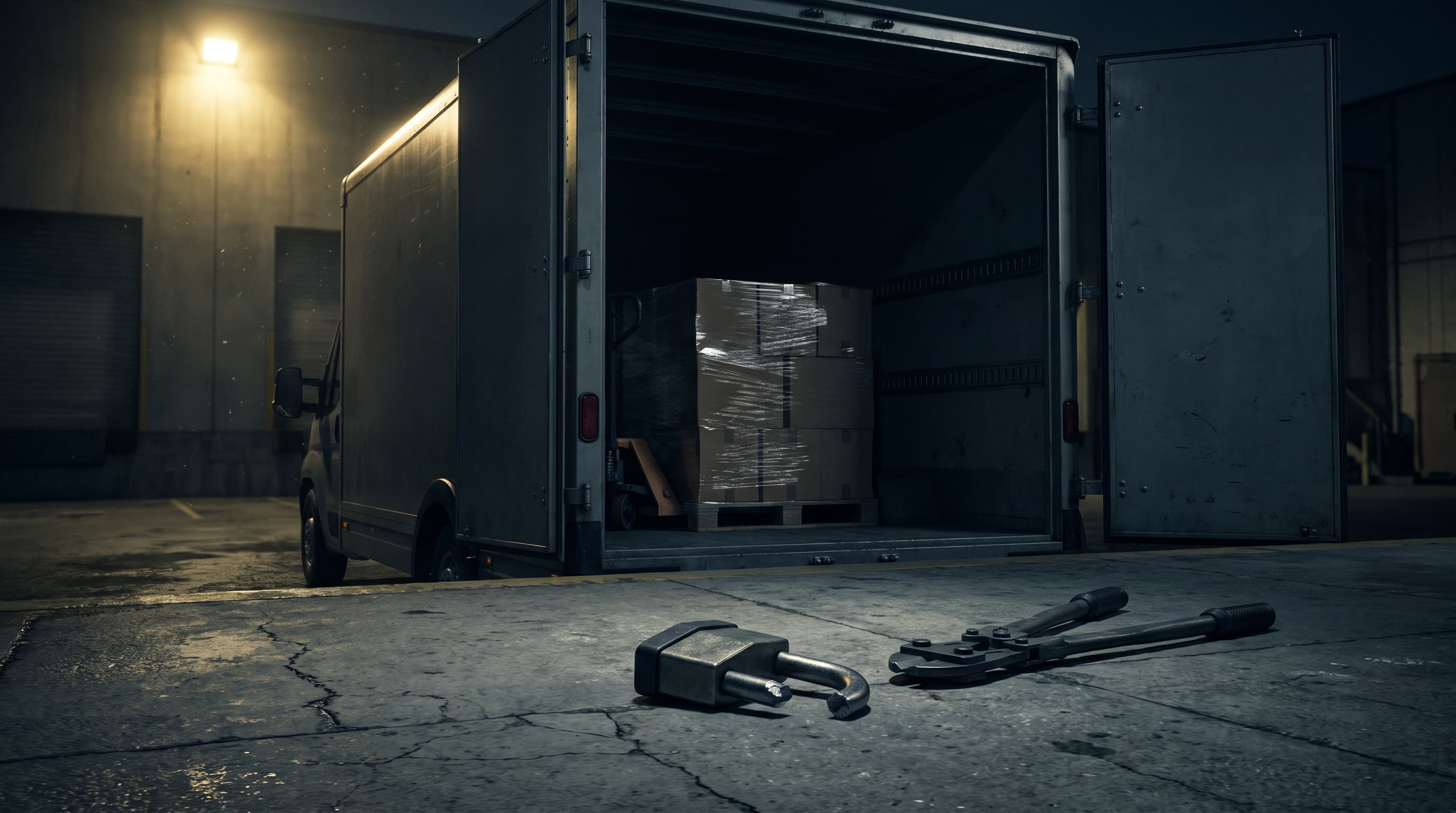
On Tuesday, Oct. 13, 2026, someone broke into a FedEx truck in Santa Ana, California, that was carrying graded orders away from PSA's facility. Santa Ana police estimate the loss at about $963,000 in cards and say the figure could rise. If you have ever wondered what happens when a PSA submission is stolen in transit, this case shows it in practice. One correction to the early coverage matters: these cards were not on their way to PSA. They had already been graded and were being shipped back to their owners.
That difference decides who is responsible for the loss. Below is what happened, what PSA has said it will do, who covers your cards at each stage of the trip, and what to set and save before your next submission.
What happened in the Santa Ana PSA theft?
Short answer: a FedEx vehicle carrying PSA-graded return orders was burglarized after it left PSA's Southern California facility. Police put the loss at about $963,000 and the case is still open.
CBS Los Angeles reports that the theft "happened on Tuesday, Oct. 13, 2026, in the 1600 block of E. St. Andrew" in Santa Ana. NBC News says the report came from Professional Sports Authenticator's location in Santa Ana, about 33 miles southeast of Los Angeles.
The direction of travel is clear from PSA's own email to customers, quoted by Heavy and Dexerto: "After leaving our PSA facility in Southern California, a FedEx vehicle transporting PSA orders was burglarized, and items were stolen." NBC News describes one Michigan collector whose cards "were certified and started their journey back" before they were taken.
What police and other reports say about the scope:
-
Value: Santa Ana police spokesperson Natalie Garcia told NBC News by email that the theft was "an estimated $963,000 worth of cards," and said the number could rise. CBS LA reported that "the exact value of what was stolen could not be determined until the remaining boxes were scanned."
-
Pallets: Police say two pallets of cards were taken and a third was "disrupted."
-
Packages: Heavy, citing The Athletic, reports about 250 packages taken in total, about 50 of them from the third pallet.
-
How it happened: In the same reporting, Heavy cites The Athletic as saying the driver was away from the vehicle for 60 to 90 minutes and that someone broke the truck's lock. Police have not given these details.
-
What was taken: CBS LA and NBC News describe sports and Pokemon cards. Dexerto reports that other collectors lost Magic: The Gathering and Yu-Gi-Oh cards in the same incident.
-
Status: Garcia told NBC News: "It remains an open case, and we have not made any arrests or recovered any stolen goods." No arrests or recoveries had been reported as of Oct. 19.
FedEx told NBC News: "The security of our customers' shipments is a top priority, and we are working with local law enforcement in their investigation."
Does PSA pay if your graded cards are stolen after grading?
Short answer: PSA says it will pay affected customers fair market value and refund grading fees. Its customer email caps that payment at the Maximum Insured Value (MIV) you chose for each item.
PSA's public statement, as published by Sports Illustrated, reads: "We have deactivated the certificates for the stolen items and notified marketplace partners so they can be on the lookout for rare and serialized items. Our customer service team has contacted affected customers directly and is arranging compensation based on fair market value."
A PSA spokesperson also told NBC News that "grading fees would be returned, along with the fair market value of the cards involved."
The customer email adds a limit that the press statement leaves out. As quoted by Sports Illustrated: "We will compensate you for the items from your order that were involved, which is based on fair market value up to the Maximum Insured Value ("MIV") you selected for each item."
Cardboard Police pointed out on Oct. 19 that the email states the MIV cap, but the press statement given to Heavy ("arranging compensation based on fair market value") does not. That fits PSA's published coverage policy, which Cardboard Police quotes as "limited to the lower of the item's fair market value or the Max Insured Value for your selected service level." Heavy describes the same lesser-of rule.
In practice, you get whichever number is lower. If a card's fair market value is above the MIV you entered, the MIV is your ceiling. If the MIV is above fair market value, fair market value is your ceiling. A high MIV does not raise your payout above what the card is worth.
What does PSA cert deactivation do?
Short answer: it marks the stolen slabs' certificate numbers as invalid, and PSA has told marketplace partners to watch for them. That helps catch slabs that show up for sale intact.
This next part is our analysis, not something PSA has said. Deactivation only helps while the card stays in its slab and the cert number is visible. A thief who cracks a card out of its holder removes the cert number. After that, the only thing tying a raw card to the theft is how identifiable the card itself is. That is why PSA's statement focuses on "rare and serialized items," and why your own photos and records matter more for common, unnumbered cards.
Who is responsible if a card is lost on the way to PSA?
Short answer: you are. PSA's FAQ says customers must insure their own packages going to PSA, and PSA is not liable for an item until its "Order Prep" scan.
Coverage changes at each stage of the trip. Here is how the sources describe each one:
-
On the way to PSA: your responsibility. The PSA FAQ says: "Customers are responsible for insuring their packages when shipping their items to PSA, and PSA disclaims all responsibility for the condition, damage while in the carrier's possession, or potential loss of items while in transit to PSA."
-
At PSA: MIV coverage starts at Order Prep. The same FAQ says PSA assumes "no liability for an item until 'Order Prep'," which is the scan of your submission barcode. That scan also starts your turnaround clock.
-
The trip home: PSA coverage up to MIV. Resell Calendar's summary of PSA's coverage policy says items are covered from the moment PSA confirms receipt until they reach their next destination, including the return trip. The Santa Ana case is that stage: PSA is paying fair market value up to each item's MIV.
-
Carrier declared value: not insurance. FedEx's declared value page says: "The first $100 of value in your shipment is included in your shipping rate at no extra charge as part of our standard $100 limit of liability." It also says plainly: "Declared value is not shipping insurance." FedEx notes that maximum declared values apply to certain items and services.
Stage one is where collectors are most exposed. Before Order Prep, PSA's FAQ puts the risk on you, and a carrier's declared value is a liability limit, not insurance. If your package goes missing on the way in, the protection you arranged yourself is the only protection you have.
What is PSA Max Insured Value and why does it matter?
Short answer: MIV is the per-item value you declare when you submit. It caps any claim payout, it sets shipping insurance, and it decides which service level and price you pay.
The PSA FAQ lists three roles for Max Insured Value:
-
"the max item value in the event of a claim connected with that item while at PSA"
-
"the max item value for shipping insurance purposes"
-
"the appropriate Service Level and Service Level price"
That creates an incentive to set it low, and the Santa Ana theft shows the cost of doing so. A low MIV can drop you into a cheaper service level. If the slab then disappears on the way home, that same low number is the most you can recover. The FAQ also limits how far you can push it: if PSA decides a stated value is too low, it "reserves the right to decline your stated Max Insured Value" and can require payment for the correct service level. Separately, "Any item with a Max Insured Value of $1,000 or more is subject to a Premium Item charge in addition to the authentication price."
So choosing an MIV is a cost decision. You are weighing the extra fees of a higher value against how much of a total loss you could recover. To test it with your own numbers, our card grading break-even calculator compares incremental net proceeds using the costs you enter, such as the fee difference between service levels. It does not predict grades, current prices or investment returns. The value estimate is still yours to make, ideally from recent sold comps.
How do you document a claim for stolen graded cards?
Short answer: keep proof of what you sent, the MIV for each item, and what each card was worth, all dated, before anything goes wrong.
The research we had does not include PSA's formal claims procedure. The list below is general good practice, not PSA's stated requirements:
-
Submission records: your order number and the submission form showing each item's MIV.
-
Photos and scans: front and back images of every card before it ships, with corners, edges and any serial numbers clearly visible.
-
Sold comps: dated screenshots of recent sales for each card at the grade you expect. Use sold listings, not asking prices, since fair market value is the other half of the payout formula.
-
Cert numbers: once your grades post, record every cert number. These are what deactivation and marketplace alerts depend on.
-
Inbound shipping: tracking numbers and any third-party insurance paperwork for the trip to PSA.
-
Correspondence: every email from PSA about the order, including any claim or compensation offer.
What affected collectors are saying
YouTuber SKY-B Cards (Skyler) told CBS LA that an order of 104 graded cards, valued at over $100,000, was stolen. "There were cards in that order that you can't replace," Skyler said. Skyler also told CBS LA: "Allegedly, there are people that have already gotten their offers from PSA in this situation, and they are insultingly low." That is a secondhand claim about other collectors' offers. No outlet in our research reported any specific offer amount.
The "you can't replace" comment points to a limit of any fair-market-value payout. For a one-of-one or a hard-to-find case hit, a check reflects a market estimate. It does not get you the card back, and comps for truly unique cards are thin, which can make fair market value itself hard to agree on.
Checklist before your next submission
-
Set each item's MIV at your honest estimate of its value after grading, not the number that gets you the cheapest service level.
-
Insure the trip to PSA yourself. PSA's FAQ disclaims responsibility until Order Prep, and carrier declared value is not insurance.
-
Save dated sold comps and photos for every card you send.
-
If you receive a payout offer, compare it with both the card's fair market value and the MIV you selected. You are owed the lower of the two, so check which one the offer is based on.
Related reading
-
What to Chase in 2026 Topps Heritage Football Before Release Day
-
A Vintage Card Centering Guide for Raw 1950s Topps and Bowman
Sources
-
NBC News: Nearly $1M in sports, Pokemon cards stolen from FedEx truck in California
-
Sports Illustrated: A Six-Figure Theft Near PSA Facility Rocking The Hobby
-
Heavy: PSA Card Theft: Police Reveal $963K FedEx Truck Burglary
-
Heavy (via Yahoo News): PSA Grading Customers Hit by Massive Card Theft After FedEx Truck Burglary
-
Dexerto: TCG collector says $100K PSA card order stolen in FedEx truck burglary
-
Resell Calendar: PSA FedEx Truck Theft May Top $1 Million in Stolen Cards
Note: This article contains AI-assisted content and has been reviewed in our editorial workflow.
DISCLAIMER: PureGrail articles are for informational and entertainment purposes only. Nothing on this site constitutes financial, investment, or legal advice. Collectibles are speculative assets and values can decrease significantly. Always conduct your own research before buying or selling. Past price performance does not indicate future results.