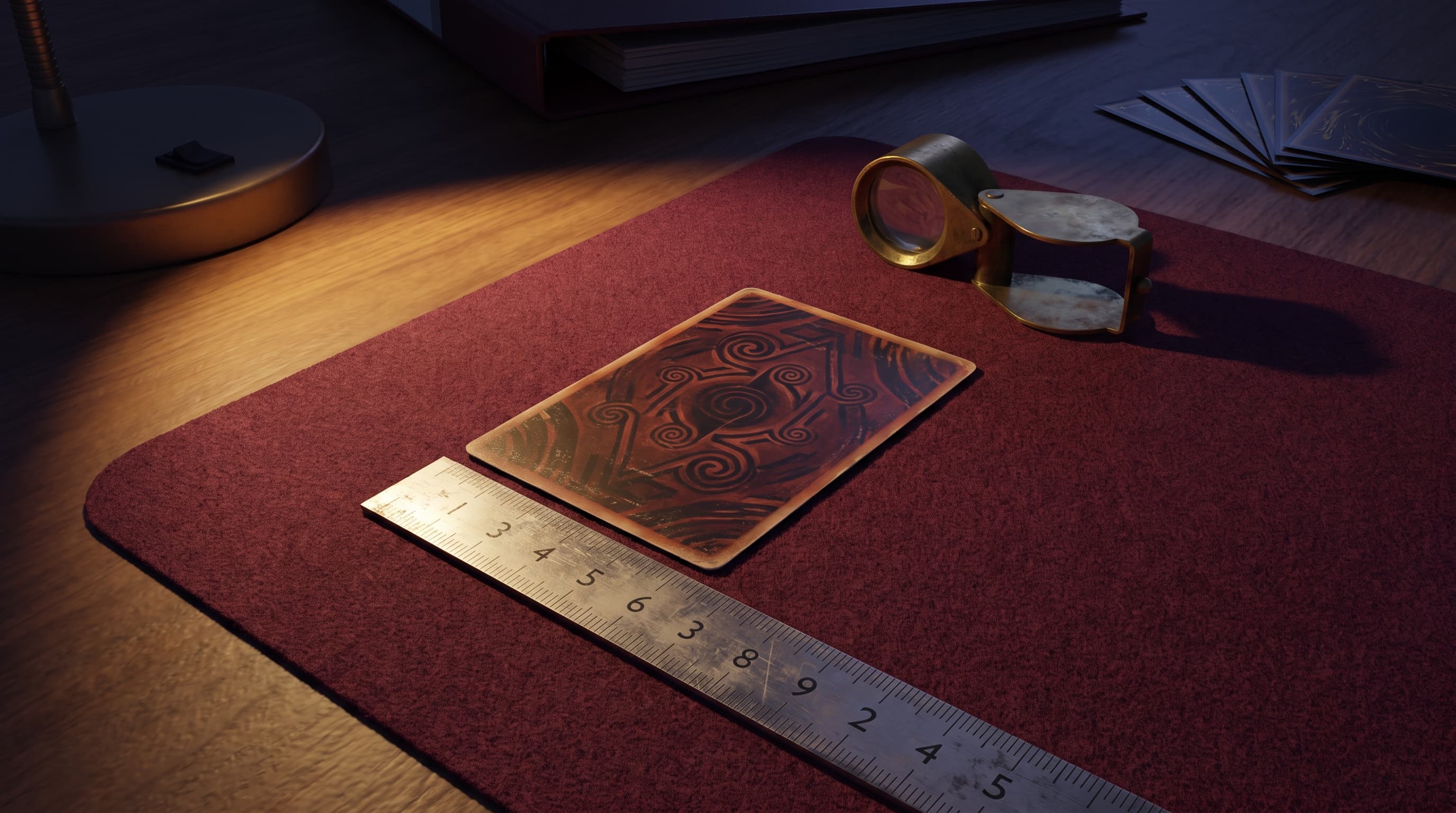
Three major vintage sales close within eight days of each other this month: Heritage's Fall Sports Card Catalog on September 18 and 19, REA's September Auction on September 20, and Memory Lane's Summer Rarities Auction on September 26. These vintage card auction tips are the checks we would run on any lot before bidding: the closing mechanics, the buyer's premium math, centering, label era and qualifiers, alteration status, and a hard ceiling built from sold comps.
First, the sale names, because you will need them to search for lots. REA calls this one its "September Auction". Its separate Fall Catalog Auction runs November 20 to December 6 (REA 2026 schedule). Memory Lane's sale is the "Summer Rarities Auction", even though it closes in late September. Only Heritage puts "Fall" in the title. We call all three the September auctions.
When do the September vintage card auctions close?
Heritage's Fall Sports Card Catalog closes in two sessions: Friday, September 18, and Saturday, September 19, both at 10 PM Central, with extended bidding running into September 19 and 20. REA's September Auction runs September 10 to 20, 2026. Memory Lane's Summer Rarities Auction runs September 10 to 26, 2026.
| House and sale | Dates and close | Lots worth studying | | --- | --- | --- | | Heritage, Fall Sports Card Catalog | Session 1 closes Fri. Sept. 18, 10 PM CT; Session 2 closes Sat. Sept. 19, 10 PM CT; extended bidding into Sept. 19 and 20 | 1986 Fleer Michael Jordan PSA 10; 1961 Topps complete set plus variations (587 + 9), ranked #4 Current Finest on the PSA Set Registry; 2018 Bowman Chrome Shohei Ohtani Blue Refractor auto PSA 10 | | REA, September Auction | Sept. 10 to 20 | 1956 Topps #135 Mickey Mantle gray back PSA NM-MT+ 8.5; 1962 Topps Willie Mays #300 PSA 8.5; 1976 Topps Walter Payton rookie PSA 9; 90+ complete and near-complete sets | | Memory Lane, Summer Rarities Auction | Sept. 10 to 26, more than 1,250 lots | 1955 Topps Sandy Koufax rookie PSA 9 ($50,000 minimum); 1916 M101-4 blank-back Joe Jackson PSA 7 ($10,000 minimum); 1951 Bowman Mantle rookie PSA 7; 1953 Topps Mantle PSA 8; 1954 Topps Hank Aaron rookie PSA 8 |
Sources for the table: Auction Report on Heritage, Sports Collectors Digest on REA and Auction Report on Memory Lane.
How extended bidding changes your plan
Extended bidding means a lot stays open past its scheduled close while bids keep arriving. Each house writes its own rules on how long an extension lasts, so read them on the auction page instead of assuming they match another house's. In practice, the scheduled close is when the serious bidding starts. That is also when people overpay: late at night, on a phone, against one other bidder, adding "one more increment" several times.
Heritage's 10 PM Central close is 11 PM Eastern and 8 PM Pacific. Our sources did not give exact closing times for REA or Memory Lane, so get those from each lot page and convert them to your own time zone. The main rule for this section: decide your ceiling before closing night, not during it.
How do you calculate buyer's premium before you bid?
What you pay is the hammer price plus the buyer's premium, so work backward from what you are willing to spend: maximum hammer bid = all-in ceiling ÷ (1 + premium). At a 23% premium, a $10,000 all-in ceiling allows a hammer bid of about $8,130. At 20%, it allows about $8,333.
The GoCollect explainer gives the basic arithmetic: a 20% premium on a $1,000 hammer makes the cost $1,200. The usual mistake is to treat your budget as the hammer number and find out after the win that you spent a fifth more.
Here is what we could and could not confirm about premiums for these three sales:
-
REA: 23%, effective September 1, 2025, according to Post War Cards, which cited REA's customer email. That is a secondary source, so confirm the rate on the lot page.
-
Memory Lane: a search snippet from the house's terms document says 20% is added to all winning bids and that a deposit may be requested on lots of $5,000 or more. We could not open the document itself, so treat both points as unconfirmed.
-
Heritage: we could not confirm the sports card rate, and the sources we found disagree with each other. We are not printing a number. Read it off the lot page.
The premium isn't the only add-on. Shipping and insurance come on top, and so does sales tax if your state collects it. Subtract your shipping and insurance estimate from the ceiling before you divide: if you expect $500 of it on a $10,000 budget, divide $9,500 by 1.23, which gives a maximum hammer of about $7,724. Check how each house charges sales tax for your state and account for that too.
What centering does a PSA 8 or 9 need?
According to Cardhound Vintage's March 2025 report, PSA's published standard now reads roughly 55/45 for a PSA 10, 60/40 for a 9 and 65/35 for an 8. That is one step tighter than the earlier language, which allowed 60/40 for a 10. PSA's CEO called the change a "language clean-up" that reflected existing practice.

Measure it yourself from the house's highest-resolution scan. Measure the left and right borders at the same height on the card, then divide the wider border by the two added together. Borders of 3.0 mm and 2.0 mm give 3.0 ÷ 5.0 = 60%, or 60/40. Repeat for top and bottom. A cropped phone screenshot is not good enough for this.
Take REA's two 8.5 headliners, the 1956 Topps Mantle and the 1962 Topps Mays. An 8.5 falls between PSA's 8 language (about 65/35) and its 9 language (about 60/40). Our sources do not give PSA's centering wording for half-grades, so don't assume a figure. What matters is that two cards with the same number can look very different. One 8.5 might be well centered with a soft corner. Another might be sharp but shifted close to the edge of what the grade allows. The label won't tell you which one you are bidding on, but the scan will. The same applies to Heritage's Jordan PSA 10 against the 55/45 language and REA's Payton PSA 9 against 60/40.
One editorial point, which is our inference and not a sourced finding: slabs graded before PSA tightened its published wording were graded while that wording was looser. We can't tell you that any particular holder was graded generously. It is one more reason to measure the card instead of trusting the number.
What do PSA half-grades and qualifiers mean for value?
PSA half-grades started in February 2008 and run from 1.5 to 8.5. There is no PSA 9.5. That means any slab showing a half-grade was graded in 2008 or later. A qualifier such as OC or MC means the card meets every requirement for the stated grade except that one flaw. Cardhound Vintage's rule of thumb is that a qualified card sells about two grades lower.
Label era
REA's Mantle 8.5 and the Babe Ruth PSA 1.5 in Memory Lane's 1934 Butterfinger (R310) set lot both carry half-grades, so both were graded in February 2008 or later. A whole-number grade on an older label was assigned without the half-step option, and before PSA's 2025 centering wording. That doesn't make it better or worse by default. It means the label tells you less than you might think, so look at the card itself.
Qualifier codes
-
OC: off-center
-
MC: miscut
-
ST: staining
-
PD: print defect
-
MK: marks
-
OF: out of focus
Cardhound's example is a PSA 6 (MC) pricing near a PSA 4. Part of the reason is that the PSA Set Registry gives a qualified 6 only 4 points, which drives away registry collectors. So when a lot carries a qualifier, look for sales of qualified copies at that grade, not the plain number. Cardhound puts it this way: "Buy the card, not the grade."
How can you tell if a pre-war card has been altered?
Start with the label. At PSA, "Authentic" can mean an unaltered card or an altered one, while "Authentic Altered" means the card has definitely been altered. SGC now prints the type of alteration, such as "Altered", "Color Added", "Evidence of Trimming" or "Miscut", instead of a bare "A" (Cardhound Vintage). Next, study the edges. Cardhound says trimming is the most common alteration on vintage cards.

Signs of trimming worth looking for in the scans:
-
Edges that are too sharp or too clean for the card's age and wear
-
Wavy, uneven or hooked cuts along one side
-
Edge color or tone that doesn't match the wear on the surface and corners
REA's lots include some good test cases (SCD). The 1888 N403 Yum Yum Tobacco Cap Anson is listed as SGC Authentic, so read the label and the house description to see whether SGC names an alteration type. The 1925 Maple Crispette Babe Ruth #8 is a PSA 2, the 1909 E92 Croft's Candy Ty Cobb a PSA 3 and the 1914 E145 Cracker Jack Eddie Collins #7 a PSA 4. Add Memory Lane's Butterfinger Ruth PSA 1.5 and you have a set of low-grade pre-war cards where the label is doing a lot of the work.
Our editorial view: low-grade pre-war cards are where alteration risk and label ambiguity matter most. Heavy wear can make edge work harder to judge from photos, and buyers at these grades are often paying extra for eye appeal. Cardhound notes that an "A" card can be a cheaper way to get eye appeal, but it resells to a smaller pool of buyers. Price it for the buyers who will actually want it later.
One labeling correction: REA's 1948 R346 Blue Tint Jackie Robinson #36 PSA 2 is a post-war card, not a pre-war one. The same edge checks still apply to it.
How do you set a maximum bid from sold comps?
Match the exact card, back variation, grade and qualifier. Use sold prices that include the buyer's premium, give the most recent sales the most weight, take something off for poor eye appeal, and write the number down before closing night.
Match the variation: 1956 Topps gray and white backs
In 1956 Topps, cards 1 to 180 were printed with both gray and white backs, and cards 181 to 340 exist only with gray backs (Post War Cards). Mantle #135 is a second-series card, and gray backs are far more common in that series. Post War Cards' 2024 count put gray backs ahead of white by roughly 9.5 to 1 across about 9,500 PSA-graded examples. White backs sell at a premium, so a white-back sale is not a valid comp for REA's gray-back lot. Neither is the $414,800 record SCD reports for the card, because that was a PSA 9 and REA's lot is an 8.5.
What we could not verify
We tried to pull current sold prices for 1956 Topps Mantle PSA 8 and 8.5 copies from Card Ladder, Sports Card Investor, SportsCardsPro and Fanatics Collect, and none of them would load for us. We are not publishing a comp we couldn't check. Pull your own on the day you bid.
The ceiling process
-
Filter for sold prices only. Asking prices don't count.
-
Check whether each sale price includes the premium. If it is hammer only, multiply by (1 + that house's premium) so every comp is on the same all-in basis.
-
Match grade and qualifier exactly. An 8.5 is not an 8, and a 6 (OC) is not a 6.
-
Give the most recent sales the most weight.
-
Take something off for any centering or eye-appeal problem you measured.
-
Write down the all-in ceiling, then convert it to a maximum hammer with the premium formula above.
If you plan to cross a card over to another grader or crack it for a regrade after you win, work that out before you bid, not after. Our crossover grading guide covers the process. The card grading break-even calculator compares the incremental net proceeds of grading or not grading using costs you enter. It does not predict grades, current prices or returns.
The pre-bid checklist
-
Dates and time zone: Heritage sessions close Sept. 18 and 19 at 10 PM CT with extended bidding; REA runs through Sept. 20; Memory Lane closes Sept. 26. Confirm the exact times on the lot pages.
-
Premium: read the percentage off the lot page. Don't rely on a figure from an article, including this one.
-
Ceiling to hammer: all-in ceiling, minus shipping and insurance, ÷ (1 + premium), with sales tax accounted for.
-
Centering measured: both directions, from the full-resolution scan, against about 55/45, 60/40 or 65/35.
-
Label era and qualifier checked: a half-grade means 2008 or later; comp qualified cards against qualified sales.
-
Alteration status understood: PSA Authentic vs Authentic Altered; the alteration type on an SGC label; edges checked for trimming.
-
Comps matched: same set, back variation, grade and qualifier, all-in prices, recent sales weighted most.
-
Terms read: auction houses generally do not take graded lots back over a disagreement with the grade. Confirm return and dispute terms in each house's rules.
Related reading
Sources
-
1956 Topps Mickey Mantle, vintage gems headline September Auction at REA (Sports Collectors Digest, September 10, 2026)
-
REA 2026 Auction Schedule (Robert Edward Auctions)
-
Heritage Auctions Fall Sports Card Catalog Ends September 19-20, 2026 (Auction Report, August 31, 2026)
-
Memory Lane Sept. 26, 2026 Summer Auction Includes Rare Vintage Cards, Sets and Historic Items (Auction Report)
-
Why REA's Buyer's Premium Increase Isn't Really About the Buyers (Post War Cards, June 15, 2025)
-
What Every Collector Needs to Know About Buyer's Premium (GoCollect, January 3, 2026)
-
PSA Changes Grading Standards (Cardhound Vintage, March 3, 2025)
-
Vintage FAQ: Understanding Qualifiers at PSA (Cardhound Vintage, November 26, 2024)
-
Vintage FAQ: Understanding 'A' Grades from SGC and PSA (Cardhound Vintage, May 12, 2024)
-
Mickey Mantle and the 1956 Topps White and Gray Backs (Post War Cards, October 16, 2024)
DISCLAIMER: PureGrail articles are for informational and entertainment purposes only. Nothing on this site constitutes financial, investment, or legal advice. Collectibles are speculative assets and values can decrease significantly. Always conduct your own research before buying or selling. Past price performance does not indicate future results.
Note: This article contains AI-assisted content and has been reviewed in our editorial workflow.