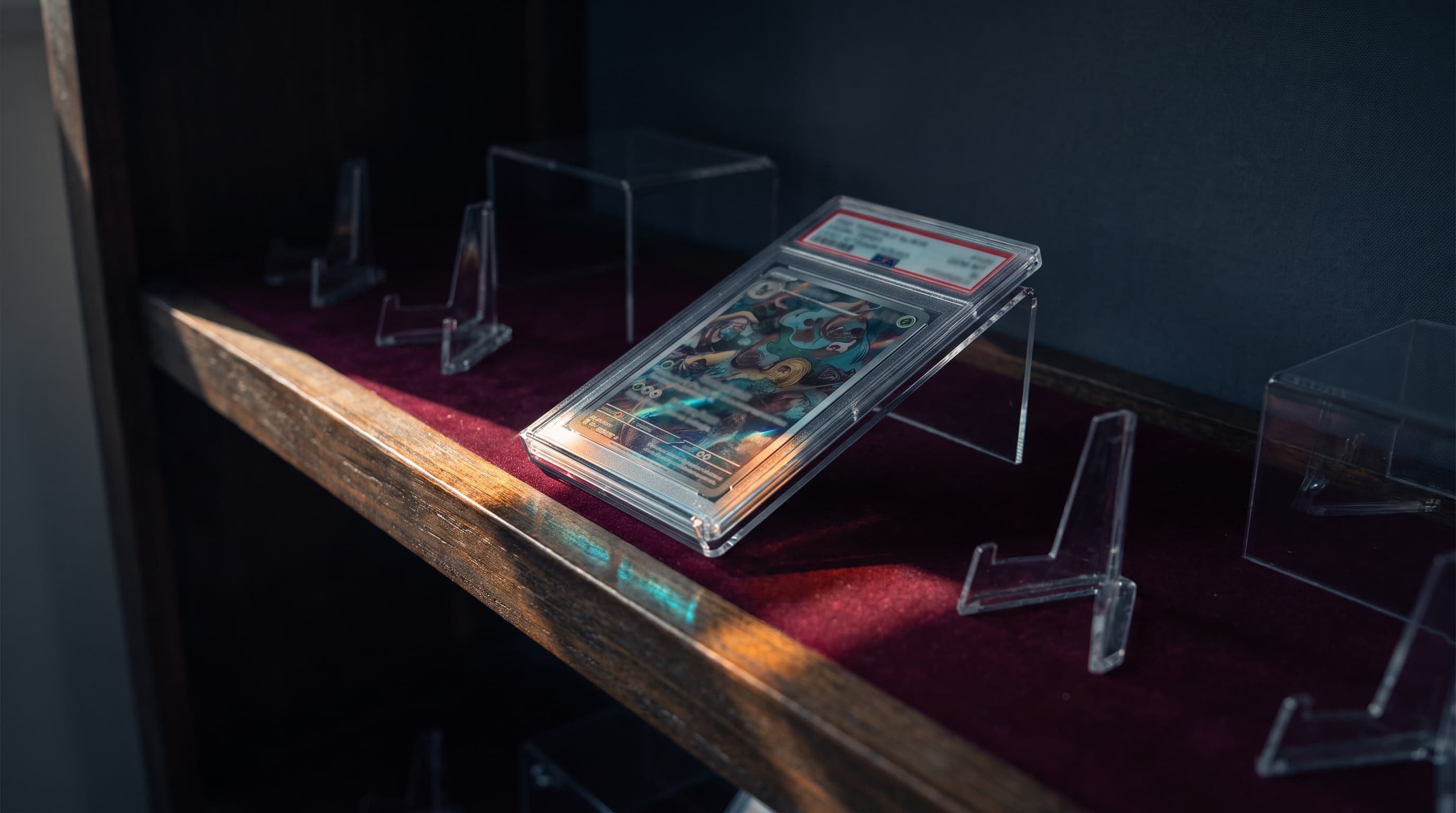
Reality Fracture prices are falling during prerelease week, and the release hasn't happened yet. According to Wizards Play Network, prerelease events run Sept. 25 to Oct. 1, and tabletop release is Oct. 2, 2026. In its Sept. 26 update, NerdSnack reported that "the regular versions of the five cards that led the first version of this guide on September 10 have lost 47% to 76% since." Its advice was blunt: "Prices are falling fast during prerelease week, so if you want a specific card, wait until after the October 2 release to buy it."
If you're buying singles, the math favors waiting on regular playables. If you're selling, the math favors listing now. Collector-only foils and the serialized Bloodline Recollector are different cases, and so far they have very little real pricing data behind them.
Why thin-supply prices mislead
The first Reality Fracture singles come from prerelease kits and from stores selling what they've opened. There aren't many of them yet, and that shows in the tracker data. The same cards carry very different prices depending on where you look:

-
Emrakul, the Exigent Doom: $60 on Draftsim's prerelease-period list, $38.06 on MTG Rocks (Sept. 24), and $35 to $40 at CoolStuffInc (Sept. 22).
-
Hexhaven Invigorator: $60.50 on Draftsim, $35.99 on MTG Rocks, and $30 to $35 at CoolStuffInc.
When sources disagree by more than 50% on the same card in the same week, the market hasn't settled on a price. Draftsim says so itself: "Supply is still extremely thin and hype is super high, so some of these prices are almost certainly going to look very different once we collectively start to open thousands of packs."
This has happened before. Back in 2022, MTG Rocks writer Riley Hicks described the "prerelease premium" as "an artificially hiked price due to an extreme lack of supply in the marketplace," and explained what usually came next: "When release day came for a set, the market would suddenly flood with copies of the new cards, drastically reducing the price of most of the new Singles as community demand was met." That piece covered the policy change that let WPN stores and private sellers ship singles before release, and it expected a "prerelease price" season to stick around. It has.
One more caution: NerdSnack's figures are the latest TCGplayer sale for each version, checked Sept. 26. A single last sale tells you what one buyer paid on one day. It isn't a market price.
What should happen after Oct. 2
Supply is the reason to expect regular cards to keep falling. Wizards' collecting guide says each 14-card Play Booster has one rare or mythic slot and one traditional foil. TableTopMeta reports an MSRP of $5.49 per Play Booster in 30-pack boxes. Every box a store opens after release adds regular rares and mythics to the market.
Braintwister versions are in the same position. Wizards says non-foil and traditional foil Braintwister cards (5 uncommon, 15 rare, 3 mythic) appear in both Play and Collector Boosters, so they'll be opened far more often than anything limited to Collector Boosters. Non-foil Shattered Mirror cards also come in both booster types.
This is an expectation based on supply, not a forecast. For a longer view, an MTGGoldfish study from 2015 looked at 90 mythics from six large sets (Return to Ravnica through Khans of Tarkir). It found "a full 83% of mythics are worth $10 or less six months post-release," and only 3 of the 90 were above $20 at six months. That data is more than a decade old, and the booster structure has changed since then. Still, it's a reasonable reminder that most new mythics don't hold launch prices.
Slots that behave differently, part 1: facet foil Shattered Mirror
According to Wizards, "Facet foil shattered mirror cards appear only in Collector Boosters and are always in English." There are 5 rare and 8 mythic Shattered Mirror cards. TableTopMeta reports Collector Boosters at $26.99 MSRP in 12-pack boxes, which means far fewer packs get opened than Play Boosters.
NerdSnack's most expensive card is a facet foil Shattered Mirror Omnipresence, which "sold for $1,000 on September 25," and it says Collector Booster facet foils hold 8 of the top 10 spots on its list. Scarcity gives these cards a real reason to hold a premium that regular copies don't have. But $1,000 is one sale during the week with the least supply. Before you treat it as the card's value, look for a few more sales at similar prices.
Slots that behave differently, part 2: Japan Showcase
Wizards says the Japanese Booster Fun team "reimagined 10 cards from Reality Fracture" as Japan Showcase cards. The Collector Booster slot reads: "A traditional foil (9%) or fracture foil (1%) Japan Showcase card." Neither version appears in Play Boosters.
That 9-to-1 split already shows up in prices. NerdSnack lists the fracture foil Japan Showcase Kwia Vigorbloom at $333, and Draftsim lists the traditional foil version at about $99. Both are early figures, but the gap is consistent with the difference in pull rates.
Language also matters. Wizards says Japan Showcase cards are always Japanese in Japanese Collector Boosters and always English in non-Japanese Collector Boosters. Treat the two languages as separate cards. Compare English sales with English sales and Japanese sales with Japanese sales, and don't combine them.
Slots that behave differently, part 3: the serialized Bloodline Recollector
Wizards says: "There are 500 serialized versions of Bloodline Recollector that can appear in Collector Boosters of any language, but the card will always be in English." A serialized double rainbow foil copy "appears in less than 1% of Collector Boosters," and "serialized cards are mechanically identical to their non-serialized counterparts." In other words, the premium comes entirely from collectors, not from gameplay.
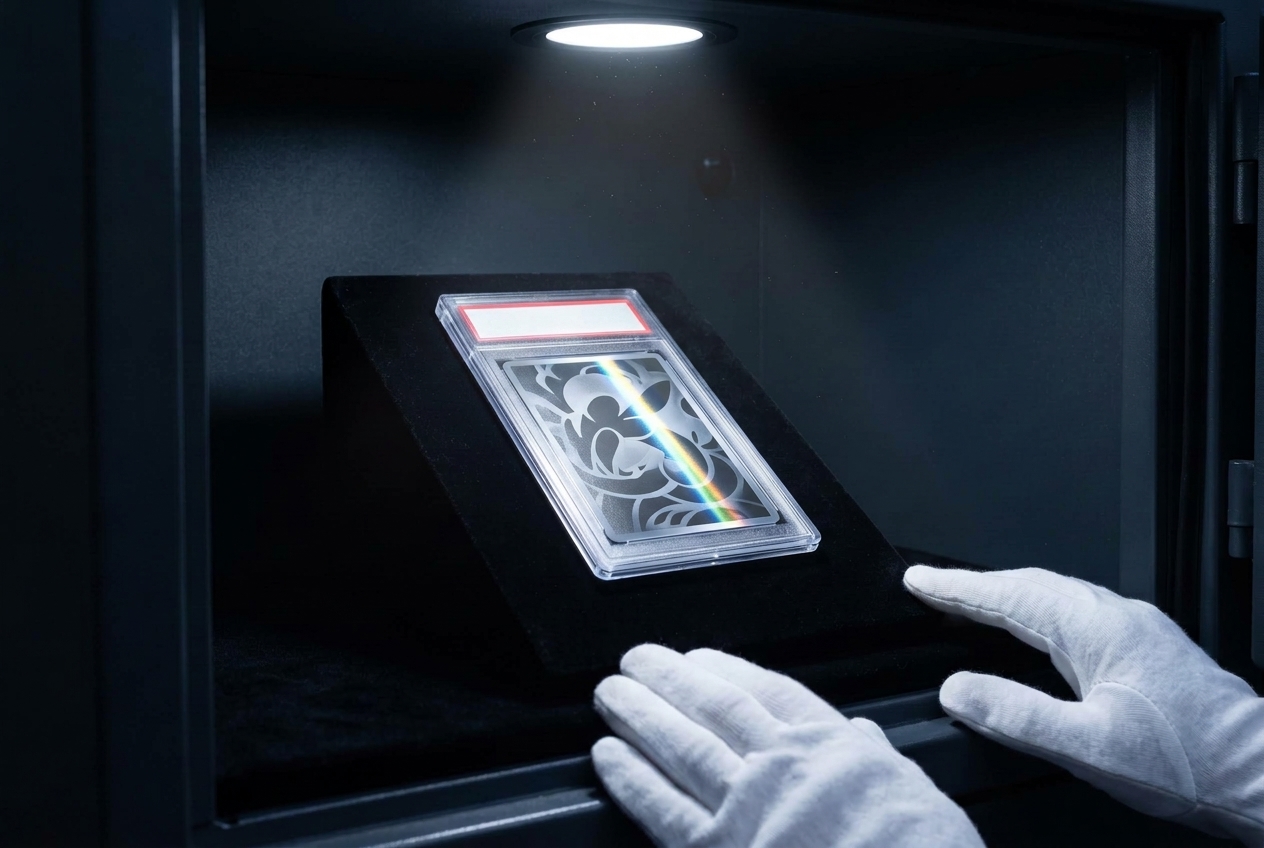
No copy has a real price yet. NerdSnack reports: "None of the 500 copies has sold publicly, and TCGplayer doesn't have a listing for it." CardGameBase puts it at "somewhere around $3,000 or slightly lower" and calls that "just guesswork." Its odds of about 1 in 7,200 Collector Boosters depend on its own estimate of roughly 300,000 Collector boxes, not an official figure.
Don't anchor on that number whether you're buying or selling. Wait for several public sales, and compare serial number and condition across them before you decide what a copy is worth.
When to buy playables
-
Skip prerelease-week listings for regular cards unless you need a copy for a specific event and the premium is worth it to you.
-
Buy after release, once store box openings add supply. NerdSnack's advice to wait until after Oct. 2 matches what happened in past sets.
-
Check at least three sources before you pay. A single TCGplayer last sale, or one tracker's number, isn't enough when trackers disagree this much.
-
For Collector-only foils, compare several sold listings, not asking prices. For Japan Showcase cards, compare within the same language.
What to do this week
If you opened a regular chase mythic at prerelease: Selling into thin supply is the rational move if you don't plan to play it. Buyers are still paying prerelease prices, and supply increases after Oct. 2. Note that WPN says the At-Home Prerelease program is retired in all regions starting with this set, so this week's prerelease supply comes from in-store events.
If you're buying for a deck: Wait. Regular versions and Braintwister versions will keep getting opened in both booster types.
If you pulled a facet foil or fracture foil and are thinking about grading: Don't base the decision on one early sale. Use our card grading break-even calculator to compare net proceeds raw versus graded using your own grading fee, shipping and marketplace costs, and a sale price you choose. The tool doesn't predict grades, current prices or returns. Its output is only as good as the comps you enter, and good comps don't exist yet for most of these slots.
If you pulled a serialized Recollector: There's nothing to benchmark against. Store it safely, document the serial number and condition, and watch for the first real public sales before setting a price.
Related reading
Sources
-
Collecting Reality Fracture (Wizards of the Coast, Mike Turian and Jubilee Finnegan, Sept. 8, 2026)
-
Reality Fracture: Dates and Details (Wizards Play Network)
-
MTG Reality Fracture Chase Cards: Most Expensive (NerdSnack, Jeff Benson, updated Sept. 26, 2026)
-
The 28 Most Expensive and Must-Have Cards in Reality Fracture (Draftsim)
-
The Most Expensive Cards From MTG Reality Fracture (MTG Rocks, Nathan Ball, Sept. 24, 2026)
-
Most Valuable Cards in Reality Fracture (CoolStuffInc, Sigmund Ausfresser, Sept. 22, 2026)
-
Reality Fracture: $5.49 Play Boosters, 30-pack boxes and 500 serialized Bloodline Recollectors (TableTopMeta, Sept. 17, 2026)
-
Serialized Bloodline Recollector: Best Reality Fracture Pull Odds (CardGameBase, A. Mlakar)
-
MTG Updates Allow Players to Get Singles Before Release (MTG Rocks, Riley Hicks, Oct. 19, 2022)
-
Pricing Mythics: Data, Dragons, and Tiers (MTGGoldfish, SaffronOlive, Mar. 12, 2015)
Note: This article contains AI-assisted content and has been reviewed in our editorial workflow.
DISCLAIMER: PureGrail articles are for informational and entertainment purposes only. Nothing on this site constitutes financial, investment, or legal advice. Collectibles are speculative assets and values can decrease significantly. Always conduct your own research before buying or selling. Past price performance does not indicate future results.