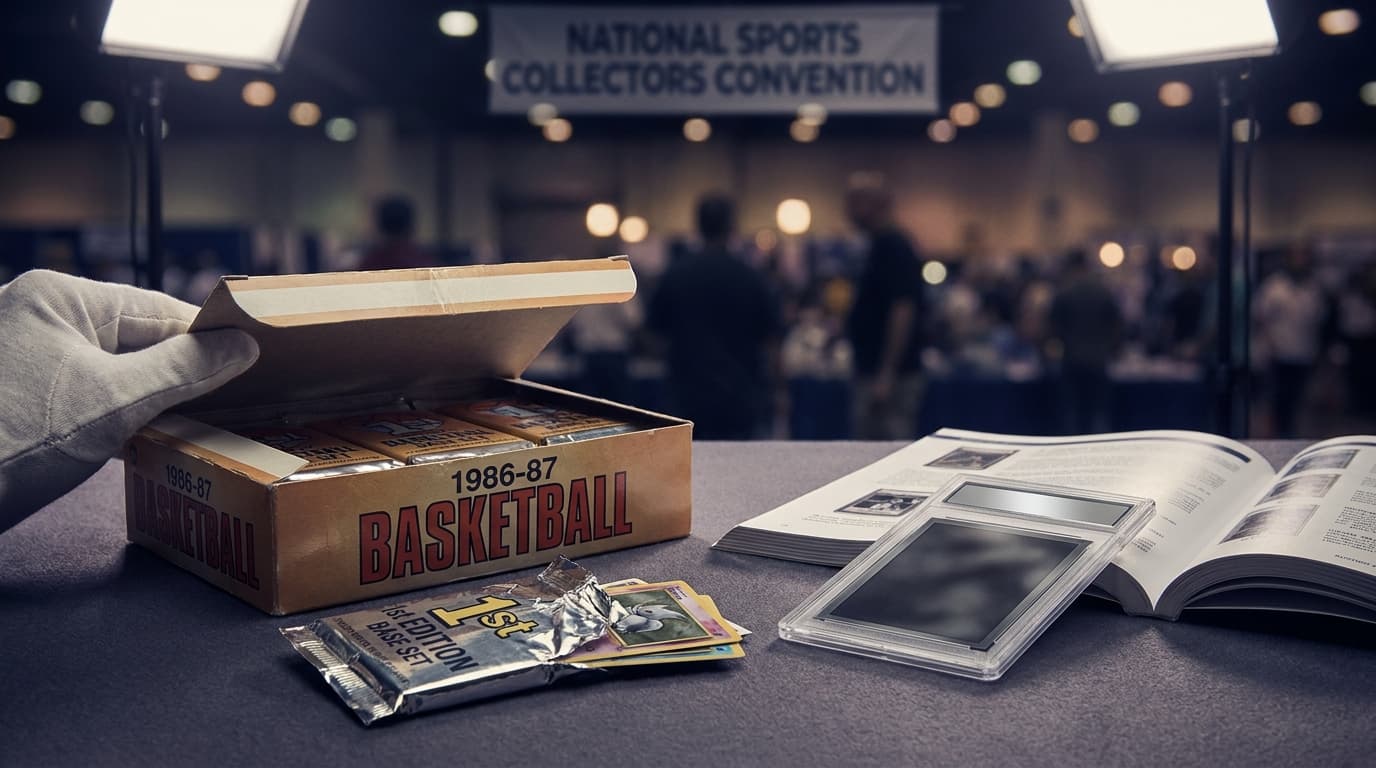
On July 30, 2026, Logan Paul and Ken Goldin will sit under stage lights near the Donald E. Stephens Convention Center in Rosemont, Illinois, and rip packs on camera. The billing is the 'National Box Break Experience': weighed 1st Edition Pokémon Base Set packs tied to the game's 30th anniversary, and 1986-87 Fleer Basketball packs tied to the 40th anniversary of the set that carries the Michael Jordan rookie. The hook that travels well on a phone screen is the Jordan card 'valued in the six-figure range.' Round it up, staple it to a livestream, and you get a headline about $400,000 boxes.
Before we go further, a correction to our own headline. The verifiable number here is 'six-figure' potential on a single Jordan-rookie pack — not a confirmed $400,000 box. And these aren't sealed boxes cracked as a unit. They're single packs and small lots. The '$400K box' is a marketing rounding error dressed as a fact, and the whole point of this piece is to separate what you can verify from what you're being sold. Keep that distinction in your pocket for the next five days.
The mechanics of the break itself
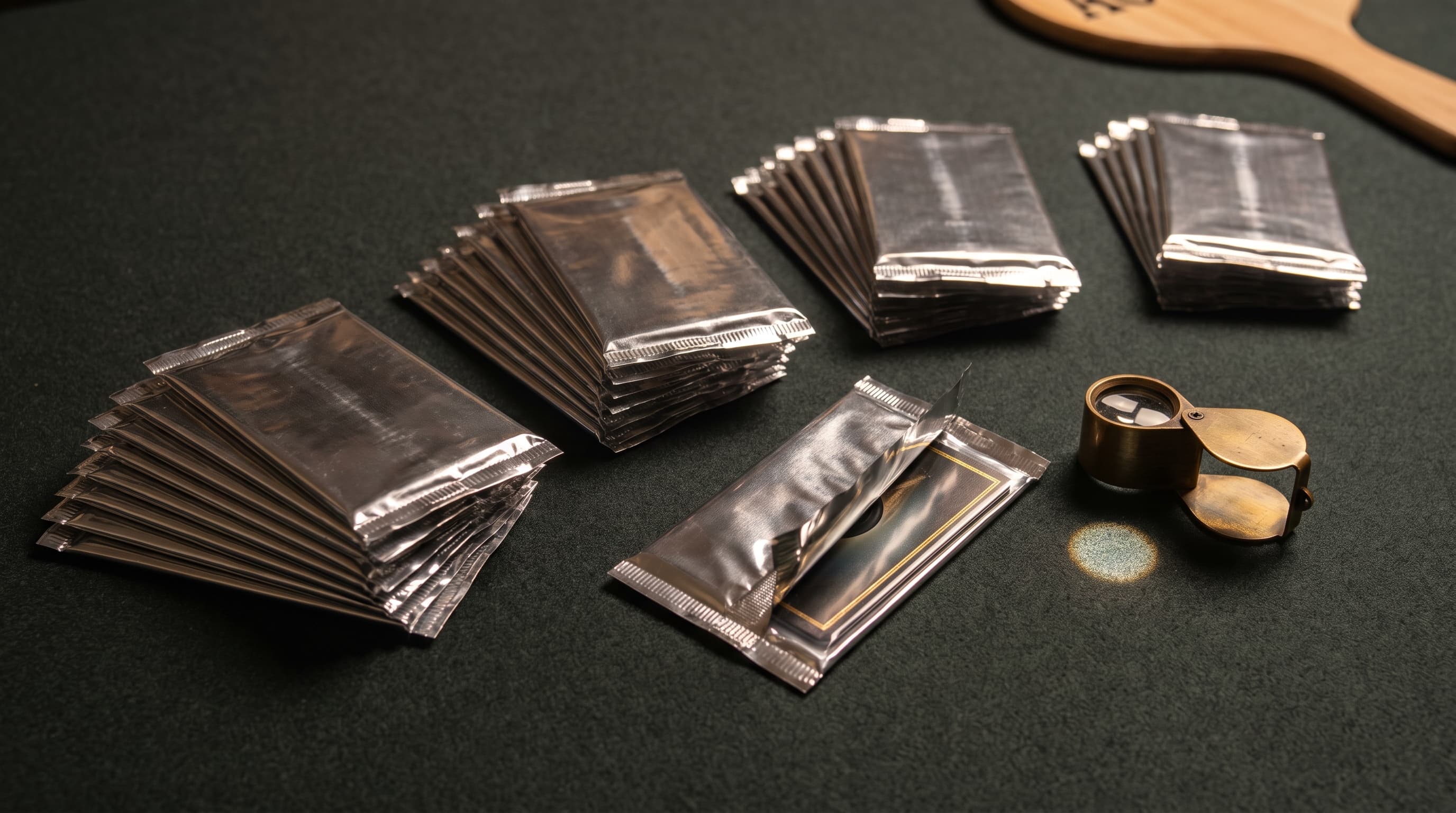
Start with the product, because the product is not the cards. Per Sports Illustrated, 44 total lots were split between Pokémon and Fleer, and every single one opened at $1. The Pokémon lots are three 1st Edition Base Set packs each, described as 'weighed to verify the presence of a holo card' — the Charizard, Blastoise, and Venusaur art being the obvious targets. The Fleer lots are one 1986-87 pack apiece with the Jordan-rookie lottery ticket inside.
'Weighed to verify a holo' is worth slowing down on, because it changes the expected value in one direction only. Holo cards in that era carried a slightly different weight than non-holos, and a pre-sort narrows what's inside — it does not tell you which holo, or its grade, or its centering. It raises the floor of the outcome and does nothing for the ceiling of your cost. That's the trade the format is built on.
And the $1 openers? That's not generosity, it's the mechanism. A dollar entry with the promise of a VIP invite, backstage access, and a possible on-stream shout-out turns 44 lots into an auction for proximity as much as cardboard. Winners, per the same reporting, cover their own travel and lodging. So the real product being sold is the seat next to the spectacle — the cards are the reason to bid, the access is the reason to overbid. Two anniversaries (Pokémon 30, Fleer 40) supply the calendar excuse. This is a well-built moment. It's just not a price discovery event, and you shouldn't read it as one.
Zoom out: the National as a liquidity event
Here's what the livestream is standing on top of. The 46th National Sports Collectors Convention runs July 29 through August 2, 2026, at the Donald E. Stephens Convention Center. General hours run Wednesday 2–8pm, Thursday through Saturday 10am–6pm, and Sunday 10am–4pm, with VIP badges entering 60 minutes early and trade nights running Thursday through Saturday from 6 to 11pm. The show reported 100,000-plus visitors in 2025 — a third straight record year — and 2026 is billed as the biggest edition yet.
Translate that from press release into market terms: for five days, a very large fraction of the hobby's buyers, sellers, and cash sits inside one building. Dealers arrive with fresh capital on Wednesday. Trade nights function as a wholesale layer underneath the retail tables — dealer-to-dealer arbitrage that most badge-holders never see. That concentration of supply and liquidity, not the on-stage rip, is the event that actually moves prices.
What concentrated supply does to bids
Supply and price move against each other, and a card show cranks up the supply side hard. The cleaner version of this comes from the trade itself. In Sports Collectors Digest, Heritage's Derek Grady framed the modern problem directly: high-population singles soften when 'every auction' has them. When a card's print run is large, a room full of dealers all holding the same parallel is a buyer's market for that card.
Vintage behaves differently because the supply is fixed and thin. During the 2022 downturn, the SCI 500 was down 12.4% year-to-date, with modern singles estimated off 30–40% while vintage stayed comparatively stable — a breadth point Sports Illustrated made in the broader market context. The takeaway isn't 'vintage always wins.' It's that a wall of identical modern inventory pressures modern prices in a way a handful of genuinely scarce vintage cards doesn't.
The 'National hangover' question
Now the part where the hobby's storytelling outruns its evidence. There's a popular idea that prices soften in the week after the National — a 'hangover' as all that concentrated supply flushes back into the market. It's a plausible mechanism. It is also, as far as any published index cleanly shows, a hypothesis rather than a measured effect.
There's a real counter-force, too. The same SCD reporting treats the National as an interest catalyst — five days of coverage, energy, and new eyes can pull demand forward as easily as supply. Whether the net effect is a post-show dip depends on which side wins, and that's an empirical question, not a slogan. If you want to test it rather than repeat it, the honest move is to pull actual data: Card Ladder's indexes let you look at specific cards and segments across the show window instead of asserting a pattern that may not survive contact with the numbers. Treat 'National hangover' as a thing to watch, not a thing to trade on.
Practical read: buy, sell, or wait
The show's own clock creates the edges, per Athlon's selling guide. If you're selling a collection, dealers commonly pay around 50–70% of recent online comps — 70–80% is closer to what the seller wants, not what the floor pays. Cash is preferred and can earn a discount, which cuts both ways: it's leverage when you're buying and a reason your sell number comes in light.
Timing is a lever. Wednesday early-entry is peak buying because dealer capital is fresh and inventory is deepest — good for finding the piece, less good for the price. Sunday afternoon inverts it: vendors would rather discount than truck inventory home, which tilts the last hours toward buyers. And shop the right table for the right thing — the dealer moving high-pop modern is your discount hunt; the vintage specialist with genuinely scarce mid-grade stock has far less reason to blink, because the supply mechanics above are on their side, not yours.
Bottom line
Strip the livestream, the $1 openers, and the rounded-up headline, and the July 30 event is a supply-and-liquidity story wearing a card-show badge. The spectacle is real and it's well-built — but it's a marketing engine, not a pricing signal. Act on the mechanics you can verify: fresh Wednesday capital, tired Sunday vendors, cash leverage, high-pop modern under pressure, scarce vintage holding firmer. Leave the $400K box where it belongs — in the headline that got you to read this far.
Related reading
-
[1,670% Search Growth, One Name Holding It Up: Is the WNBA Card Category a Boom or a Caitlin Clark Concentration Bet?](/article/wnba-cards-boom-or-caitlin-clark-concentration-bet)
Sources
-
Show Hours — The National Sports Collectors Convention (official)
-
What to Expect at the 46th National Sports Collectors Convention (official)
-
Logan Paul, Ken Goldin Partner For Box Break Experience — Sports Illustrated
-
What's New at the 46th National Sports Collectors Convention in 2026 — Athlon Sports
-
How to Sell Cards at The National 2026 in Rosemont — Athlon Sports
-
Market Analysis: Decline in Sports Card Values and The National — Sports Collectors Digest
-
[Sports Card Prices are Falling: Is It the End? — Sports Illustrated](https://www.si.com/collectibles/inside-the-hobby/sports-card-prices-are-falling-is-it-the-end)
Note: This article contains AI-assisted content and has been reviewed in our editorial workflow.
DISCLAIMER: PureGrail articles are for informational and entertainment purposes only. Nothing on this site constitutes financial, investment, or legal advice. Collectibles are speculative assets and values can decrease significantly. Always conduct your own research before buying or selling. Past price performance does not indicate future results.