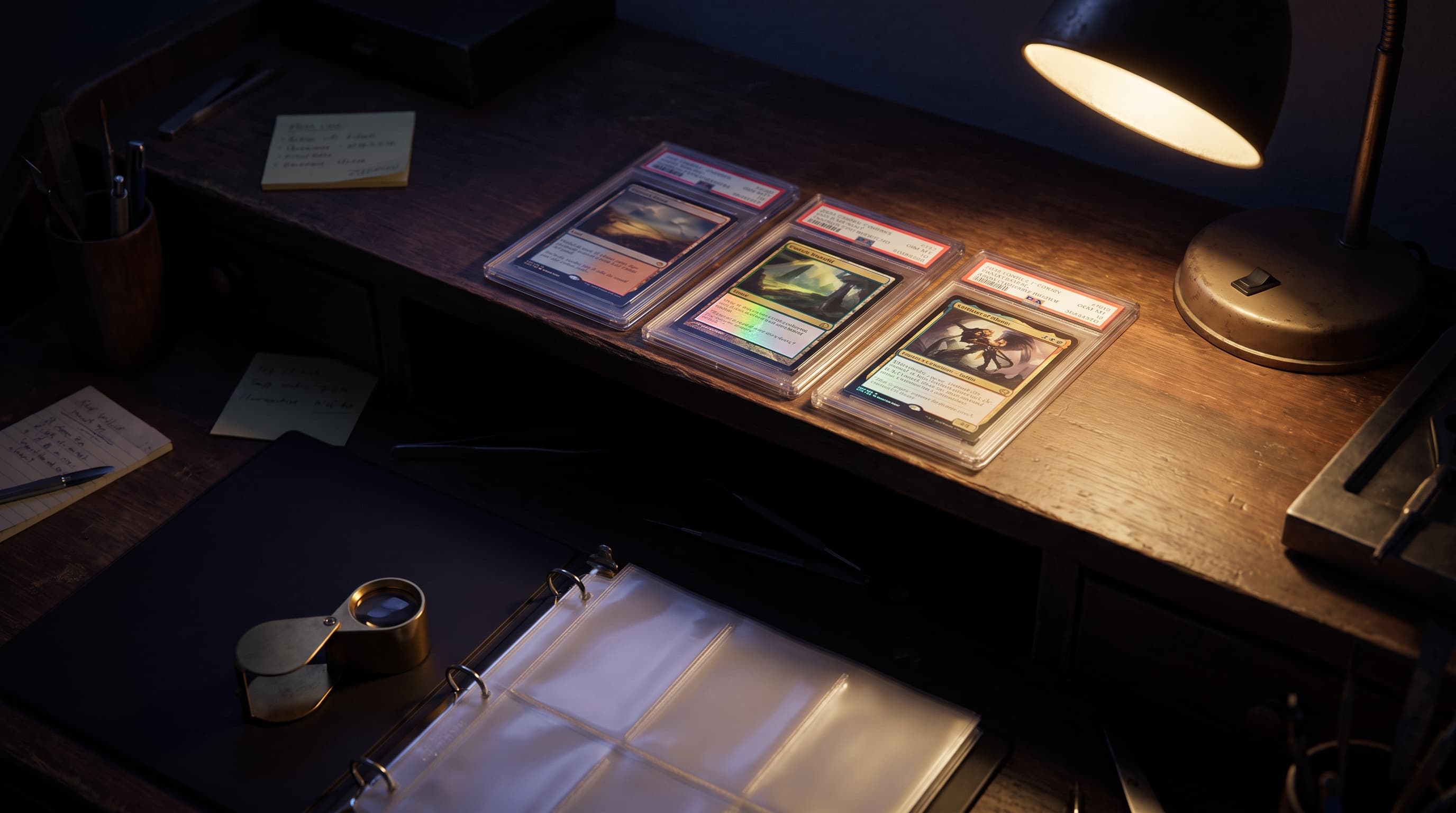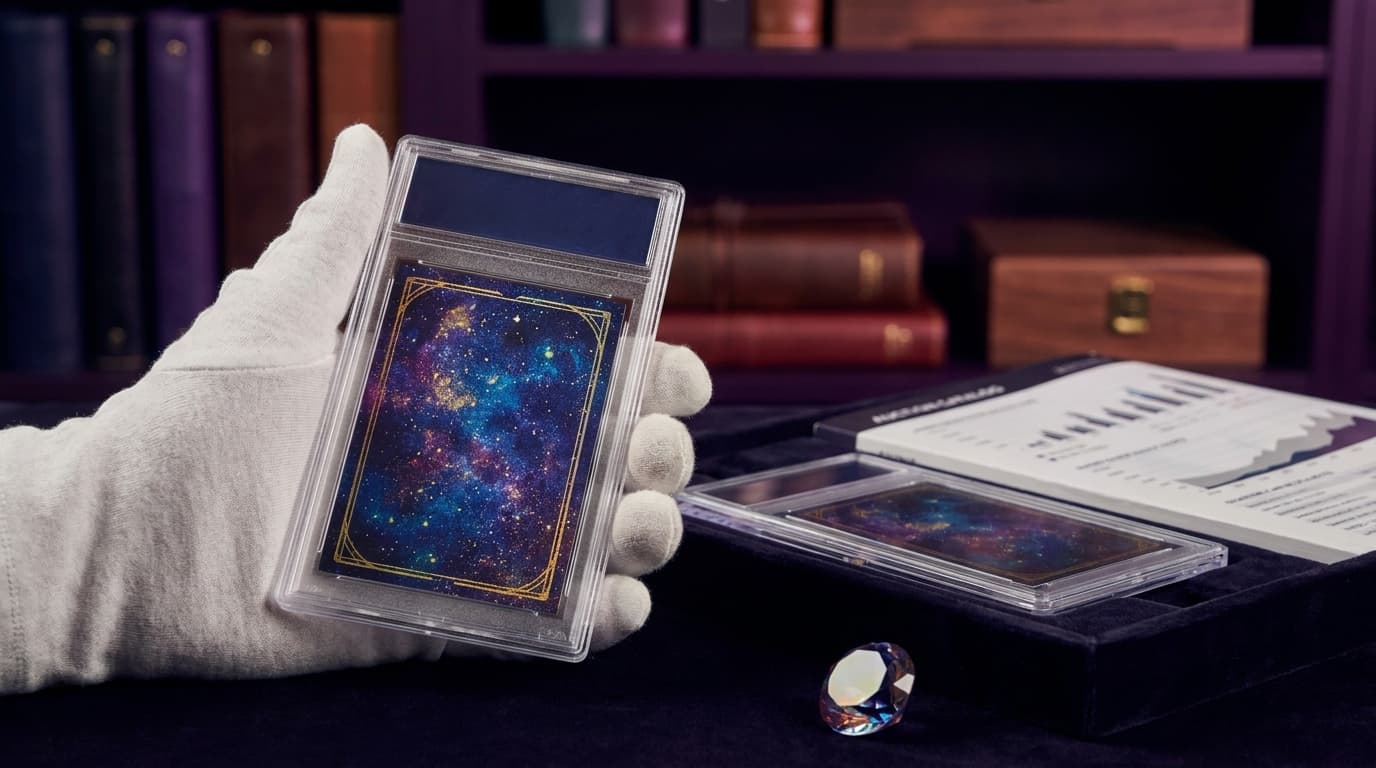
The number doing the work in every Mind Stone headline is "fewer than 150." It is an accurate number, sourced straight from Wizards of the Coast. It is also doing something most readers don't notice: it describes one treatment of the card — the textless Cosmic Foil — and not the version almost anyone reading a presale page will actually buy. Before you treat the Mind Stone as the next entry in a multi-year "collect the cycle" play, it is worth separating the scarcity that is real from the scarcity the marketing wants you to feel.
The setup: a second Stone, three very different cards
Marvel Super Heroes (set code MSH) releases June 26, 2026, and it is the second Magic set to carry an Infinity Stone — The Mind Stone — after The Soul Stone debuted in Marvel's Spider-Man. Per Wizards' own collecting article, the Mind Stone ships in three distinct forms, and the gap between them is the whole story:
-
Base art (non-foil and traditional foil, illustrated by Volkan Baga) — the accessible version, available broadly.
-
Borderless "Gauntlet" foil (Thanos's grasp), found only in Collector Boosters.
-
Textless Cosmic Foil — the chase. Wizards states it has "fewer than 150 printings," appears only in Collector Boosters of any language, and sits in the foil Booster Fun slot at under 1% odds. Cardgamebase puts the realistic pull rate near 0.015% per booster.
So the "under 150" card is, statistically, something you will not open. That matters because the thesis being sold to buyers — buy in early, scarcity does the rest — quietly transfers the scarcity of the Cosmic Foil onto cards that don't share it.
The bull case, stated fairly
The argument for the cycle is not empty. The Soul Stone is the proof-of-concept, and it has performed. The standard Soul Stone has climbed toward roughly $90. Its borderless Gauntlet version trades around four figures — PriceCharting data tracks it in that range, with a figure near $1,098 cited in May 2026. And the Cosmic Foil has reached genuinely startling numbers: Draftsim documented sales in the $25,000–$49,000 range, including a recorded trade at $32,999.
If you believe the Mind Stone follows the same arc, the structure looks tidy: a few-dollar base card, a four-figure borderless, and a five-figure chase — a tiered market with a built-in story. That is the case. Now the pressure tests.
Pressure test #1: scarcity and access are not the same card
The "fewer than 150" print cap applies to the Cosmic Foil and nothing else. The base Mind Stone and the borderless Gauntlet are not print-run capped in any number Wizards has disclosed. They are produced to demand, and — critically — they are exposed to Wizards' long, well-documented history of reprints and resealed product. A capped chase card and an uncapped accessible card are different assets with different risk. Conflating them is the single most common error in the cycle pitch: the scarcity you can verify lives in the version you almost certainly won't own.
Pressure test #2: the six-set timeline is an assumption, not a roadmap
Six Infinity Stones exist — Soul, Mind, Space, Power, Time, and Reality — and two have now appeared. The popular framing is "one Stone per set through roughly 2030, a full six-Stone cycle." But that is community extrapolation. As MTGRocks reported, head designer Mark Rosewater confirmed only that there is "one Infinity Stone in the set." He did not announce a six-set schedule or a 2030 finish line. The entire multi-year "collect the cycle" play depends on Wizards staying a course it has not publicly committed to. (For background on all six Stones and how the cross-set structure is imagined, Draftsim's overview is a useful primer — but a primer on an unconfirmed cadence is still a primer on a guess.)
Pressure test #3: froth reverses, and it already has
Presale hype is not price discovery. Draftsim reported that Marvel Super Heroes booster boxes dipped roughly 26% ahead of release weekend — sealed-product enthusiasm softening before the set was even out. Sealed product also carries resealing risk over time, and singles carry reprint risk. None of that is fatal to the cycle, but all of it argues against paying a hype premium on the assumption that the line only goes up.
Reality-check on the numbers
One specific claim circulating deserves a correction. Some coverage frames the basic Mind Stone as a "$100+" card. Verified presale data does not support that for the base version. The [TCGplayer presale listing](https://www.tcgplayer.com/product/693022/magic-marvel-super-heroes-the-mind-stone) (shipping 6/26/2026) puts the base non-foil Mind Stone roughly in the $54–$75 range, with a market price near $66. If you see "$100+," it is either running ahead of the data or quietly referring to a foil or borderless printing — not the standard card. Know which one you're being quoted.
Verdict: not a buy signal
This is not a recommendation to buy or to sell. It is a framing. For the cycle thesis to hold, several things have to be true at once: Wizards has to keep printing one Stone per set on something like the imagined cadence; the accessible versions have to resist the reprint pressure their lack of a print cap exposes them to; and demand has to outlast the kind of presale froth that just knocked 26% off booster boxes. The Soul Stone shows the upside is real for the genuinely scarce chase card. It does not prove that the uncapped, reprintable versions most buyers can actually acquire will behave the same way. The honest read: the "under 150" number is true, impressive, and largely irrelevant to what's in your binder.
Related reading
-
[Replenish at $225 With No Buyout Behind It: How Premodern's Post-Parallax-Tide Meta Turned a Reserved List Enchantment Into Genuine Demand](/article/replenish-225-premodern-parallax-tide-meta-reserved-list-demand)
-
A Record Month While Base Cards Bleed: The K-Shaped Hobby in One Dataset
Sources
Note: This article contains AI-assisted content and has been reviewed in our editorial workflow.
DISCLAIMER: PureGrail articles are for informational and entertainment purposes only. Nothing on this site constitutes financial, investment, or legal advice. Collectibles are speculative assets and values can decrease significantly. Always conduct your own research before buying or selling. Past price performance does not indicate future results.