You have one sealed booster or hobby box on the shelf and three options: open it, keep it shrink-wrapped, or sell it and buy the singles you want. That is the sealed vs singles decision. This guide makes no prediction about where prices are headed. It lays out the costs each path carries so you can run the numbers with your own sold prices.
Is it better to open a booster box or keep it sealed?
No answer fits every box. Opening makes sense when the cards you pull are worth more to you, after fees and effort, than the box would bring sealed. Keeping it sealed makes sense only if you can store it well, can prove the seal is genuine when you sell, and can live with the publisher printing more. Buying singles often wins when you want specific cards, not a chance at them.
Five tradeoffs decide it: what expected value math leaves out, what it costs to hold a box, how easy each format is to sell, reprint risk in each game, and how fees and taxes hit each path.
How do you calculate booster box expected value?
Box expected value (EV) is the sum of each card's pull odds multiplied by its sold price. Add that up for every card worth selling and you get a gross figure. Most EV numbers posted online stop there, which is why they tend to flatter the box.

What box EV usually leaves out
-
Asking prices in place of sold prices. A listing shows what a seller hopes to get. Completed sales show what buyers paid. Build EV from sold prices only.
-
Selling fees. On eBay, Sports Trading Cards, Non-Sport Trading Cards and Collectible Card Games carry a final value fee of 13.25% on the sale total up to $7,500 per item and 2.35% on the portion above that, plus $0.40 per order on orders over $10, according to eBay's selling fees page. The fee is figured on the whole order total, including shipping charged to the buyer and sales tax, not the item price alone.
-
Shipping and supplies. Sleeves, top loaders, mailers and postage come out of your side of every sale you ship.
-
Cards that will not sell. A box is mostly commons and low-value cards. If you would never list them, they count for zero in your EV.
-
Grading costs. If a hit is only worth its EV figure in a slab, the grading fee belongs in the math.
-
Falling prices on the hits. Each box opened puts more copies of the chase cards on the market. An EV built on early sales can go stale as supply grows.
-
Variance. EV is an average across many boxes. One box can land far below it, and you are opening one box, not a hundred.
A fill-in EV template
Use your own recent sold prices here, not ours.
-
List every card in the set you would realistically sell. For each, multiply the per-box pull rate by the recent sold price. Add the results. This is gross EV.
-
Subtract selling fees. On eBay, take 13.25% of each expected order total (item, shipping charged and sales tax), plus $0.40 for each order over $10. As a simple illustration, a hypothetical $100 order total would carry a $13.25 final value fee plus the $0.40 per-order fee.
-
Subtract the shipping and supplies you pay for.
-
Subtract grading fees for any card you would grade before selling.
-
Knock down the hit prices to reflect more copies reaching the market as the set gets opened.
-
Compare the result with two other numbers: what the sealed box would net you after the same fees, and what it would cost to buy only the singles you want.
If your net EV is below the sealed box's net sale value, opening means paying for the experience. That can be a fine choice, as long as you know that is what you are buying.
What does it cost to keep a box sealed?
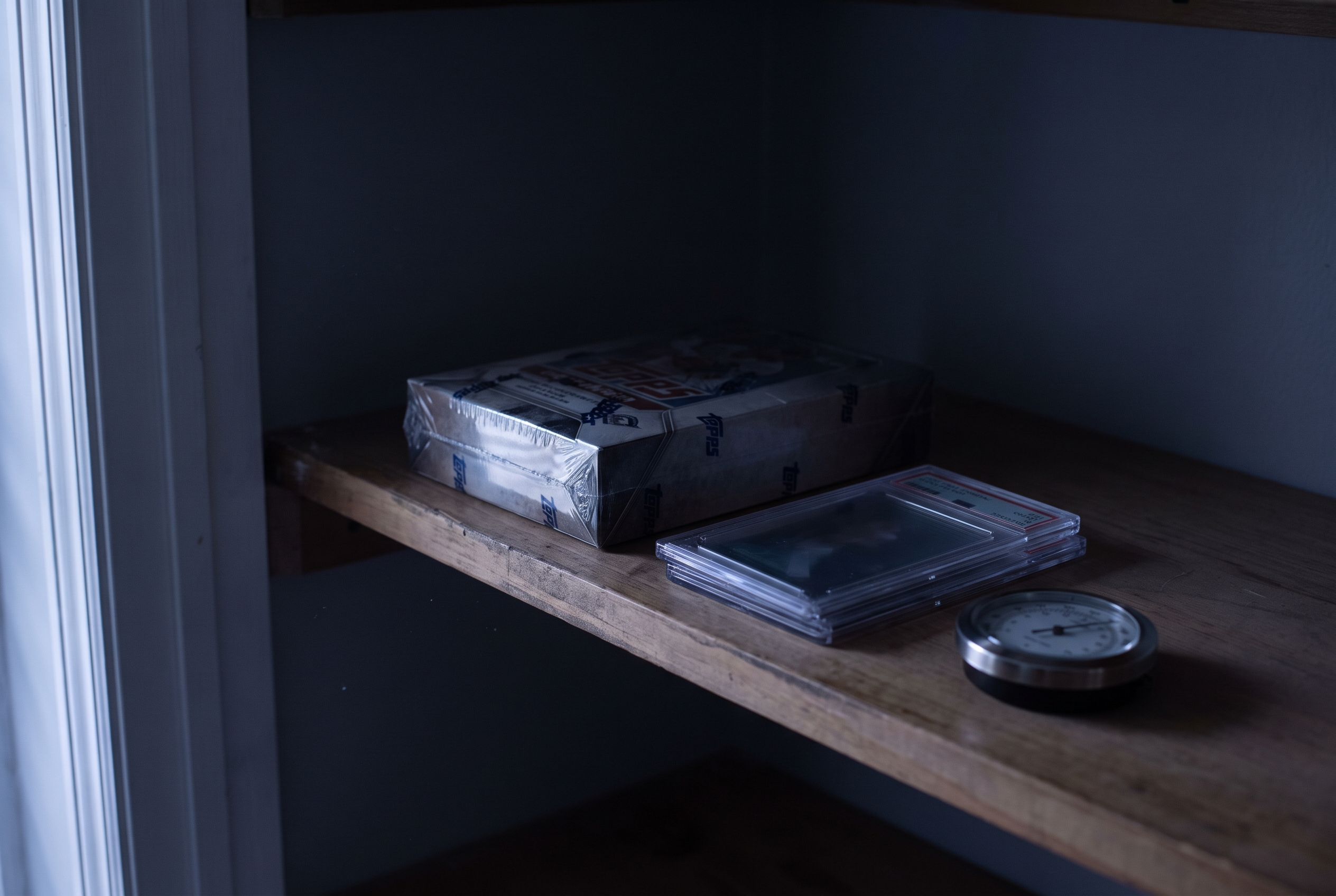
Holding sealed product is not free, even if nothing leaves your bank account.
-
Tied-up money. The cash in a box earns no income while it sits. Whatever the box eventually sells for has to cover that wait.
-
Space and conditions. Boxes need room and a cool, dry, stable spot. Specific temperature and humidity targets are best taken directly from a conservation source; we have not listed figures here because we could not verify them on the original guidance page.
-
Insurance. If your collection is large, check whether your policy covers it and what documentation the insurer wants.
-
Condition damage. Torn shrink wrap and dinged corners lower what a buyer will pay for sealed product, and a torn wrap also makes the seal harder to trust.
Is it easier to sell a sealed box or singles?
The two formats are hard to sell for different reasons.
Selling sealed: one sale, but buyers worry about reseals
A sealed box is one listing to one buyer, which keeps fees and shipping simple. The catch is trust. Resealed boxes are a known problem, and buyers pay less for sealed product with no clear history. Hobby guides commonly list warning signs such as plain shrink wrap on a product that normally ships in logo wrap, tape or glue on the flaps, doubled seams, and prices below the going rate from new seller accounts. Treat these as collector guidance, not an official standard.
Third-party authentication exists for some sealed product. Baseball Card Exchange (BBCE) lists a fee of 8% of BBCE's buy price for the box, with an $8 minimum and a $5,000 maximum, charged whether the box passes or fails. Passing boxes are wrapped in BBCE shrink wrap with an ID sticker. Rush service is 15% (minimum $15) with a 2 to 3 business day turnaround. When we checked, BBCE's page said the service was temporarily paused to "review and strengthen the program," so confirm it has resumed before you plan a sale around it.
Selling singles: many sales, each with its own costs
Opened product turns one sale into many small ones. Every listing takes time, and every order carries its own fee and shipping cost. On eBay the trading card fee is the same for sealed boxes and singles, so the difference is volume: more, smaller orders mean the $0.40 per-order fee and shipping eat a larger share of each sale.
eBay has run a 50% final value fee discount for trading card singles that sell for $1,000 or more, and sealed product did not qualify. The promo page we checked shows a March 3 to May 4, 2025 window, so check whether any version is running before you count on it. If you sell on other marketplaces, confirm their current seller fees on their official pages before comparing.
Will the set be reprinted?
Sealed value leans on scarcity, and scarcity depends on the game and the set. Publishers have shown they will reprint.
Magic: The Gathering
Wizards of the Coast's official reprint policy, dated May 4, 2016, says: "Reserved cards will never be printed again in a functionally identical form." The same policy says no cards from Mercadian Masques or later sets will be reserved, and no cards will be added to or removed from the list. Oversized versions are allowed and digital versions are exempt. In practice, the Reserved List protects only old Magic cards. Modern Magic sealed product has no reprint protection.
Pokemon TCG
In March 2025, The Pokemon Company said, as reported by VGC: "We're aware that some fans are experiencing difficulties purchasing certain Pokemon Trading Card Game (TCG) products due to very high demand impacting availability." It said it would print more of the affected products "as quickly as possible and at maximum capacity" and would maximize production for future sets. In May 2026, Kotaku reported the company's figures: about 10 billion cards printed in the latest year and more than 85 billion since 1996, up from a lifetime total of 34.1 billion in May 2021. Kotaku also reported that recent sets were still hard to find in stores. For a sealed holder, the point is that a set being scarce at retail today says little about whether more will be printed.
One Piece Card Game
Bandai's PRB-02 premium booster released in Japan on July 26, 2025, with the English release in October 2025. It reprinted staples including Boa Hancock, Portgas D. Ace, Monkey D. Luffy 061, Bon Clay, Sanji, Cavendish and Rayleigh. Otia reported that the original printings began falling in price almost right away, with the Luffy 061 alt art down $25 or more from its high. That is trade-press reporting, not a sold-price dataset, but it shows how a reprint can hit the cards that make up a box's EV.
When is buying singles better than opening a box?
Singles tend to come out ahead in these situations:
-
You want specific cards. If the goal is a card for a deck, a binder page or a set, buying it directly removes the variance.
-
A few chase cards make up most of the EV. When most of a box's value sits in a handful of pulls, most boxes will miss them.
-
A reprint has been announced or looks likely. Given the Pokemon and One Piece examples above, that risk hits sealed holders and hit prices alike.
-
You have no good place to store boxes. A binder takes far less room than a stack of sealed product.
If you already pulled a hit and are deciding whether to grade it before selling, run your own numbers through the card grading break-even calculator. It compares net proceeds from selling raw vs graded using the costs you enter. It does not predict grades, current prices or returns.
Do you pay taxes when you sell trading cards?
Possibly, and the rate can differ from what you pay on stocks. IRS Topic 409 says: "Net capital gains from selling collectibles (such as coins or art) are taxed at a maximum 28% rate." Gains are long-term if you held the item more than one year and short-term if you held it one year or less, and the two are treated differently. Trading cards are not named on that IRS list, but they are generally treated as collectibles. This matters for sealed vs singles because a sealed box is usually held longer, while cards pulled and flipped quickly are more likely to be short-term.
Whichever path you take, keep the receipt for the box, records of any singles you buy, and your sale records with fees shown. This is not tax advice; ask a tax professional how the rules apply to you.
Sealed vs singles checklist
Answer each with your own numbers. There is no scoring key, but several "no" answers on the sealed side point away from holding.
-
Do I want the cards or the box? If it is specific cards, price the singles first.
-
Do I have sold prices, not asking prices, for the cards that drive this box's EV?
-
Do I have a cool, dry, stable place to store it without damaging the wrap or corners?
-
Can I prove the seal is genuine to a buyer who is wary of reseals?
-
Has this set been reprinted, or could it be? Check the game's reprint record before you assume scarcity.
-
Would I be fine if the box sat unsold for a year? If not, holding sealed may not suit your budget.
Fees and policies in this article were checked on September 14, 2026, and can change. Nothing here is a price prediction or financial advice.
Related reading
Sources
-
Save 50% on final value fees when you sell singles $1,000+, eBay
-
Pokemon addresses Pokemon trading card shortage, vows increased production, VGC
-
10 Billion Pokemon Cards Got Printed And It Still Wasn't Enough, Kotaku
-
One Piece TCG PRB-02 Reprint Set Brings Major Price Drops, Otia
-
How to Submit Your Items for BBCE Authentication, Baseball Card Exchange
DISCLAIMER: PureGrail articles are for informational and entertainment purposes only. Nothing on this site constitutes financial, investment, or legal advice. Collectibles are speculative assets and values can decrease significantly. Always conduct your own research before buying or selling. Past price performance does not indicate future results.
This article contains AI-assisted content and has been reviewed in our editorial workflow.